



What Is No-See-Um Screen, and When Is It Worth the Upgrade?
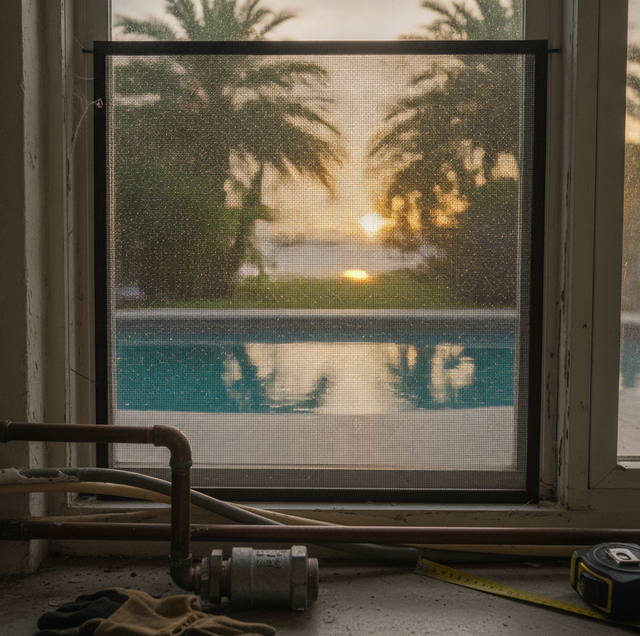
You are sitting under the cage at dusk, the mesh looks intact, and yet something keeps biting your ankles. You check the panels and find no holes, no gaps at the corners, nothing torn. The screen is doing its job against mosquitoes, and still the welts keep coming. What is getting through is not squeezing past a defect. It is walking straight through the weave, because the openings in a standard pool screen are simply bigger than the bug. That is the whole reason the no-see-um screen exists, and understanding how it works tells you whether it is worth putting on your cage or not.
What No-See-Um Screen Actually Is
No-see-um screen is an insect mesh woven tighter than the standard screen most pool cages and lanais ship with. The difference comes down to mesh count, the number of threads per inch running in each direction. A typical pool and patio screen runs around 18x14, meaning 18 threads one way and 14 the other. No-see-um screen runs closer to 20x20, so there are more threads packed into the same inch, and the open squares between them are smaller.
Those smaller openings are the entire point. No-see-ums are tiny biting midges, a couple of millimeters long, small enough to fit through the gaps in an 18x14 weave, the way a person walks through an open doorway. Gnats do the same. Tighten the weave to 20x20, and the openings shrink below what those insects can pass through, so they stop getting in. Mosquitoes and larger bugs never made it through the standard mesh in the first place; the no-see-um screen is aimed squarely at the little ones that do.
Think of it like the difference between chicken wire and window screen. Both are barriers, but the size of the hole decides what actually gets stopped. Standard screen stops the big stuff and lets the smallest bugs through. Finer screen closes that last gap.
Why the Tighter Weave Costs You Something
If a finer mesh only added protection, every cage would come with it from the factory. It does not, because closing those openings has real tradeoffs, and they are worth knowing before you commit.
The biggest one is airflow. Every thread you add is a little more solid material and a little less open space for a breeze to move through. A 20x20 weave has noticeably less open area than an 18x14, so a cage screened entirely in no-see-um mesh feels stiller and warmer on a hot, humid afternoon than the same cage in standard screen. Under a Florida sun that matters, because a lanai that does not breathe is a lanai you stop using in the middle of the day.
Visibility takes a smaller hit in the same way. More threads across your line of sight means a slightly denser, grayer view out to the yard or pool deck. Most people stop noticing after a day, but side by side against a standard screen, the finer weave reads a touch less clear.
The tighter weave also catches more of what floats in the air. Pollen, dust, and the fine grit that humidity carries all snag on mesh, and a denser weave with smaller openings traps more of it. That shows up as a screen that hazes over faster and needs to be rinsed more often to stay clean and keep breathing.
How It Compares to the Other Screen Options
No-see-um screen is one choice among several, and each weave is built for a different priority.
The standard 18x14 screen is the default for a reason. It moves the most air, gives the clearest view, and stops mosquitoes and anything larger. Its only weakness is the one no-see-um screen was made to fix: the smallest biting insects can pass through it.
Pet-grade or heavy screen goes the opposite direction from no-see-um mesh. Instead of a finer weave, it uses thicker, tougher strands to resist claws and impact. It is about durability against dogs and stray footballs, not smaller openings, so it does not do much extra against tiny bugs.
Solar and privacy screens are woven or coated to block a share of sunlight and outside sightlines. It cuts glare and heat gain and shades the space, which a no-see-um screen only does a little of as a side effect. If your main goal is sun control or blocking the view in, that is a different product than a bug-focused mesh.
No-see-um screen sits in its own lane: the answer specifically for the small biting insects the others let through.
When Upgrading Is Actually Worth It
The upgrade earns its place in a few clear situations, and it is wasted effort outside them.
The most obvious is when you are already getting bitten inside the cage, and the screen has no holes. If no-see-ums or gnats are the ones finding you, tightening the weave is the fix that standard screen cannot offer. Screening a lanai or cage near water is the other strong case. Ponds, canals, retention areas, and the coast all breed midges, and they swarm most at dawn and dusk, exactly when you want to be outside. A tighter weave changes whether those hours are usable. Wanting more privacy is a lesser reason that still counts, since the denser mesh makes it a little harder to see in.
If none of that describes your cage, a standard screen is usually the better call, because you keep the airflow and the view you would otherwise trade away.
Doing It as a Partial Upgrade
Here is the move most people do not know they have: you do not have to screen the whole cage in no-see-um mesh to get the benefit. Because bugs come from ground level and off the water, the panels that matter most are the lower ones and the pool-facing side. Screening just those in the finer weave, and leaving the upper panels and roof in standard 18x14, blocks the insects where they actually enter while keeping the bulk of your airflow up high, where heat needs to escape.
That partial approach is also easier on the structure, which brings up the last thing to know. The screen is rated for wind, and a tighter weave with less open area catches more of a gust than an open one does, because the wind has less room to pass through and pushes harder on the panel. On a large pool cage, that added load is real, and covering every panel in the densest mesh puts more strain on the frame and the spline in a storm than a targeted upgrade does. Screening the lower and poolside panels gets you bug protection while sparing the big high panels and the frame from the worst of the wind load.
One more point worth holding onto, no matter which screen you pick. The mesh itself is only half the system. Every panel is held in by a spline, a vinyl cord rolled into a groove around the frame to pinch the screen tight. Over years of sun and heat, that spline dries out, and the aluminum frame takes the real beating from storms and corrosion, and that hardware is what usually fails long before a good mesh wears out. So a screen upgrade is only as good as the frame and spline behind it. If those are already tired, they are the first thing to sort out.
What It Comes Down To
No-see-um screen trades a measure of airflow, clarity, and cleaning effort for a weave tight enough to stop the biting midges and gnats that walk through standard screen. It is the right upgrade when tiny bugs are getting in, when you are screening near water, or when you want a bit more privacy, and it is often the smartest approach as a partial job on the lower and poolside panels rather than the whole cage. Match the choice to your actual bug problem and your airflow needs, keep an eye on the frame and spline that hold it all, and you get a cage you can enjoy at dusk rather than retreat from.
Frequently Asked Questions
What is no-see-um screen actually made of, and how small are the openings?
A standard 18x14 pool screen is made of fiberglass strands coated in vinyl; no-see-um mesh is usually a tighter fiberglass weave, and some versions use a polyester yarn (the same family as the tougher "tuff-screen" style cloth) that resists sagging at the finer count. At roughly 20x20, the open square between threads drops to about a fifth of a millimeter across, tight enough to stop a midge. A side effect of packing in that much thread: the mesh cuts a bit of glare and throws slightly more shade than open screen, so the space reads a touch cooler-looking even before you notice the bug difference.
How much airflow do you actually give up with no-see-um mesh?
Going from an 18x14 weave to a 20x20 weave roughly halves the open area of the cloth, so a fully screened cage can feel closed-in on a still afternoon. The practical workaround is to screen only the lower or poolside panels with the finer mesh, and leave everything from about eye level up in standard 18x14. Warm air rises and escapes through those upper panels, so you keep the through-breeze and the vertical draft up high while still blocking the midges down where they actually come in.
Does the tighter mesh change how it gets installed?
It does. The finer, slightly heavier cloth wants more spline tension to sit flat without waves, and a thicker spline size is sometimes rolled in to grip it in the frame channel. It also catches more wind: because the weave has less open area, a gust pushes harder on the panel, so on a big pool cage, it matters which panels carry it. Many installers frame the lower and pool-side panels so the finer mesh sits in removable, re-splined panels you can pop out and store before a named storm, then reset after, which spares both the cloth and the frame the worst of the load.
Does a no-see-um screen add privacy or block the sun?
A little of both, but it is not a substitute for the screens built for that. The denser weave makes it slightly harder to see through and blocks a small share of light, a side effect of the tighter threads. If sun control, glare reduction, or real privacy is your goal, a solar or privacy screen is woven or coated specifically for that and does far more of it than a bug-focused mesh.
Can I screen just part of the cage with no-see-um mesh?
Yes, and it is often the smartest approach. Biting midges rise from ground level and off nearby water, so the lower panels and the pool-facing side are where they get in. Screening those in the finer weave and leaving the upper panels and roof in standard 18x14 blocks, the bugs where they enter while preserving airflow up high and easing the wind load on the largest panels.
Does the no-see-um screen need more cleaning, and can I pressure-wash it?
It clogs faster and needs a gentler touch. The smaller openings trap more pollen, and near the coast, a salt film builds on the threads and holds dust, so the finer mesh hazes over sooner than the open screen. Do not put a pressure washer on it: the concentrated stream stretches or tears the light cloth and can blow it right out of the spline. Rinse with a garden hose on a normal spray, or wipe with a soft brush and mild soapy water, working top to bottom, more often than you would bother with a standard screen.
Book a free on-site estimate to weigh no-see-um mesh against your airflow and wind needs — get the right screen for your cage without guessing. Lanai Guy serves Brandon, Riverview, and the greater Tampa area. Call (813) 316-5971 for an estimate.