



Privacy Screen vs Solar Screen: Which One Your Lanai Actually Needs
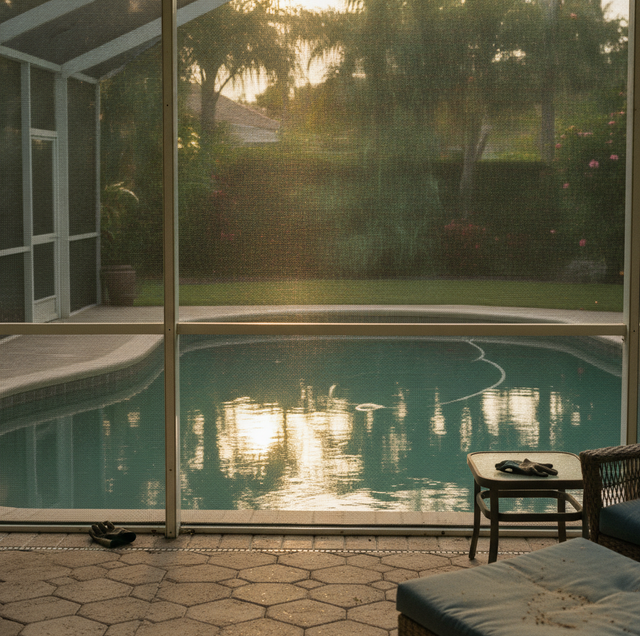
You are standing under your pool cage trying to decide what to put on it, and two options keep coming up: a privacy screen and a solar screen. They sound similar, they both cost more than the plain insect mesh already on the cage, and a lot of people assume they do more or less the same thing. They do not. One is built to control what people can see. The other is built to control heat and light. Pick by the name, and you can easily spend on the wrong one, so it helps to understand what each weave is actually engineered to do before you decide.
What Each Screen Is Built to Do
The two screens solve different problems, and the difference starts in the weave.
Privacy screen is a dense, tightly woven fabric whose whole job is to break up sightlines. Where a standard insect screen is mostly open space with thin threads, a privacy screen packs the material in so the eye cannot follow a clear line through it. From the outside, someone on the sidewalk or in the next yard sees a flat, shaded panel instead of you in the pool. That density blocks the view in both directions, so it also softens the view out, and as a side effect, it knocks down some of the light and wind passing through. But its design target is sightlines, not temperature.
Solar screen, sometimes called solar shade fabric, is designed to block the sun. It uses a tight, uniform mesh engineered to intercept a large share of the sun's heat and ultraviolet light before either reaches the space behind it. Manufacturers rate these fabrics by how much solar heat gain they block, and the better ones stop a substantial portion of it, which keeps the lanai cooler, cuts glare off the water and the deck, and slows the fading that constant sun causes on furniture and cushions. Unlike a privacy screen, it is built to still let air move through and to keep a usable view out to the yard, with the balance between them depending on how open the weave is.
Think of it like sunglasses versus a curtain. Sunglasses cut the sun's glare and heat while you still see through them; a curtain blocks the view but is not engineered to manage heat. Solar screen is the sunglasses. The privacy screen is the curtain.
The Openness Factor: The Number That Defines a Solar Screen
Solar screens are rated by the openness factor, and it is the single most useful number for choosing one. It describes how much of the weave is open space versus solid thread, given as a percentage. A low openness factor means a denser weave: more heat and glare stopped, but a darker, less clear view out. A higher openness factor means a more open weave: a brighter, clearer view, but less sun blocked. Neither is right nor wrong. It is a dial you set based on how much you value staying cool versus keeping a crisp view of the pool and yard.
The privacy screen is not rated this way because it is not trying to meet a heat target. It sits at the very dense, near-opaque end on purpose, since a weave you can see through would not hide anything. That is the core split: a solar screen lets you tune the balance, while a privacy screen commits to blocking the view.
QUICK ANSWER: Choose a privacy screen when the problem is people seeing into the lanai; choose a solar screen when the problem is heat, glare, or fading from the sun. If both bother you, you can run each one on the panels where it matters most.
Airflow, View, and Where Each Screen Belongs
Because the two weaves are built differently, they behave differently once they are on the frame, which determines where each earns its spot on the cage.
Airflow follows the weave. A solar screen is designed to keep breathing, so a sun-facing wall in solar fabric still lets a breeze move while it blocks the heat. A privacy screen is denser, so it cuts more of the breeze along with the view; that is a fair trade on a wall where hiding from the street matters more than catching wind, but it is why you would not wrap an entire cage in it.
View follows the weave, too. Solar screen maintains a usable outward view during the day, which is why it suits the sides that face your yard or pool deck. A privacy screen deliberately clouds the view in both directions, which is exactly what you want on the side facing a neighbor's window or a road, and exactly what you do not want on the side you like to look out from.
That is why the smart layout is rarely one screen everywhere. Privacy screen goes on the exposed sides where people can see in. Solar screen goes on the hot side, usually the west or the wall that takes the hardest afternoon sun. Standard insect screen handles everywhere else, where you just want bugs out, air in, and a clear view. Here is how the two specialty screens compare at a glance.
Privacy Screen vs Solar Screen at a Glance
| Feature | Privacy Screen | Solar Screen |
|---|---|---|
| Main purpose | Block the view in and out | Block solar heat and UV |
| View in / out | Heavily obscured both ways | View out kept; view in reduced in daylight |
| Heat blocking | Minor, a side effect | Rated; blocks a large share of solar heat |
| Airflow | Reduced by the dense weave | Kept, tuned by the openness factor |
| Best placement | Sides facing neighbors or a road | Sun-facing/ west-facing sides |
Why the Frame and Spline Matter With Either Screen
Both of these fabrics are heavier and denser than the standard 18x14 insect screen a cage usually ships with, and that changes the install. Heavier mesh needs a spline sized to hold it firmly in the frame channel, and it puts more load on the frame itself, especially in wind. A denser weave acts more like a sail than an open insect screen does, so a gust pushes harder against it. On a cage near open water or in a spot that catches the wind, that load is real, and it is the main reason these screens are a job for a pro rather than a weekend swap. An installer sizes the spline to the fabric, checks that the frame and fasteners can carry the added pull, and tensions each panel so it does not balloon or pop loose the first time the weather turns. Getting that wrong does not just look bad; a panel that lets go in a storm can damage the frame it was attached to.
Intense Sun and How It Should Steer the Choice
A hot, sunny climate pushes hard in both directions, which is worth weighing before you decide. The sun in these areas is intense and year-round, so heat, glare, and fading are a constant pull toward solar screens; an uncovered lanai can get uncomfortable by early afternoon for much of the year, and UV works on your furniture the whole time. At the same time, the outdoor-living culture in warm regions means people are in their yards and by their pools in every season, so the neighbor-visibility problem that privacy screens solve does not go away in the cooler months either. Both pressures are present most of the year, which is exactly why the decision comes down to your specific lanai: which side bakes, which side is exposed to eyes, and whether one problem bothers you more than the other. For many cases, the honest answer is a little of both, placed where each does the most good.
Deciding Between Them
Strip it down to one question: what is actually bothering you out there? If it is people seeing in, whether from a road, a shared fence line, or a neighbor's second-story window, a privacy screen is the tool built for that, and you put it on the exposed sides. If it is the heat, the glare bouncing off the water, or watching your cushions fade, solar screen is the one engineered for that, and it goes on the sun-facing walls. If both are true, you are not choosing one over the other; you are deciding which panels get which. An installer can walk the cage with you, note where the sun lands and where the sightlines are, and map out which screen belongs on which side so every panel does the job that spot needs.
Frequently Asked Questions
Does a privacy screen also block heat, or just the view?
It does a little of both, but heat is not what it is built for. The dense weave that hides sightlines also blocks some light and some wind, so a privacy panel shades the space a bit as a byproduct. What it lacks is the engineered, rated heat-blocking performance of a solar fabric, which is designed and tested specifically to stop a measured share of solar heat gain. So a privacy screen shades; it does not do the heat job a solar screen does.
What does the openness factor on a solar screen mean?
It is the percentage of the weave that is open space rather than solid thread, and solar screens commonly come in ratings around 3, 5, and 10 percent. A 3 percent weave is the densest and blocks the most heat and glare, which suits a hot west-facing wall where cutting the sun matters most. A 10 percent weave keeps a clearer, brighter view and works where the sun is less of a problem, with 5 percent sitting in between. Picking the number is really picking how much view you trade for how much heat you stop.
Can I see out through a solar screen but not in?
During daylight, mostly yes. The brighter outside makes it hard for someone to see into the shaded lanai, while you can still see out fairly well. But that effect flips after dark: with lights on inside and darkness outside, the view reverses, and people can see in. So a solar screen gives you some daytime privacy as a bonus, but it is not a full-time privacy screen and should not be relied on as one after sunset.
Are these screens heavier than a regular pool-cage screen?
Yes. Both privacy and solar fabrics are denser and heavier than the standard insect screen most cages come with. That means they need a spline sized correctly to grip the heavier mesh and a frame strong enough to carry the extra load. They also catch more wind because the tighter weave acts more like a sail, so the installer accounts for that when choosing the spline and checking the frame and fasteners.
Can I mix screen types on one enclosure?
Yes, and many enclosures are set up exactly that way, with different weights of screen sharing the same cage. One detail matters at the seams: where panels of different weights meet at a shared frame member, the installer sizes the spline to the heavier screen and may reinforce that member. The reason is wind load. The denser solar and privacy panels catch more wind than a standard insect screen, so the shared member has to carry the pull from the heavier side without flexing or letting a panel work loose.
Will a denser screen trap more debris or need different cleaning?
A tighter weave does catch more pollen and dust on its surface, and its smaller openings can hold water a little longer after rain. That means it benefits from a gentle, regular rinse to keep it clear and breathing. What it does not want is hard scrubbing, since applying aggressive pressure to a dense mesh can stretch or tear the weave. Rinse it more often, but treat it more gently than you would a plain insect screen.
Book a free on-site estimate — get the right screen on the right side of your cage. Lanai Guy serves Brandon, Riverview, and the greater Tampa area. Call (813) 316-5971 for an estimate.