



How Long Does a Rescreened Pool Enclosure Last?
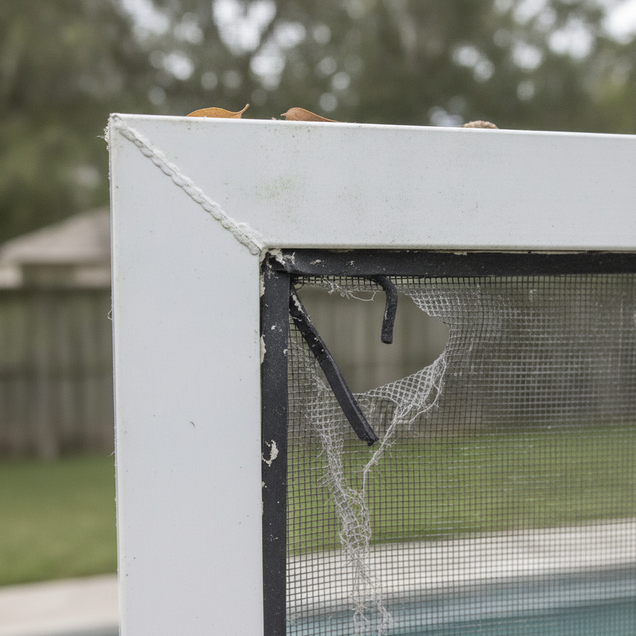
You are looking at a pool enclosure with sagging, torn screen and thinking about a rescreen, and the natural question is how long the new screen will actually last before you are back here again. It is a fair thing to ask, because rescreening is an investment, and the answer depends heavily on the screen you choose and the punishment your climate hands out.
The short version: a rescreen commonly lasts several years to over a decade, and the range is wide for reasons worth understanding before you pick a material.
The Sun Is What Wears Screen Out
Screen mesh does not wear out from use; it wears out from ultraviolet light. Constant, intense sun breaks down the mesh fibers and the spline that holds it in the frame, making the screen brittle over time until it cracks, tears, and sags. The more relentless the sun, the faster this happens, which is why the same screen that might last a long time in a mild climate has a shorter life under harsh, year-round UV. So the lifespan of a rescreen is really a question of how well the material resists UV and how much of it the screen has to take.
How Long Each Type Lasts
The material you choose is the biggest lever on lifespan.
| Screen material | Typical lifespan in strong sun |
|---|---|
| Standard fiberglass mesh | About 7 to 10 years (sometimes less) |
| Premium polyester/no-see-um / vinyl-coated | About 10 to 15 years |
| The cage frame (aluminum) | Often 20 to 30 years |
Standard fiberglass mesh, the most common and economical choice, generally lasts about 7 to 10 years in strong sun, and under the harshest exposure, it can become brittle sooner. Higher-quality options, such as premium polyester, tighter no-see-um mesh, or vinyl-coated screens, are built to resist UV better and typically last 10 to 15 years or more. It is worth separating the screen from the frame here: the aluminum cage structure itself typically lasts decades, often twenty to thirty years, so a rescreen is renewing the mesh on a frame that will outlive several screens. Choosing a longer-lasting mesh is what stretches the years between rescreens.
What Shortens a Screen's Life
Beyond the material, a few things speed up the wear. Storms are the big wildcard: high winds and flying debris can tear or blow out screen panels long before UV would have finished them, so a single strong storm can force a rescreen regardless of the screen's age. Poor installation shortens life too, since a screen that is not tensioned properly or a spline that is the wrong size fails early at the edges. And neglect plays a role, as dirt, mildew, and debris left on the screen trap moisture and accelerate breakdown. Good installation, occasional cleaning, and prompt repair of small tears before they spread all help a rescreen reach the long end of its range.
Why This Climate Is Tough on Screens
Two forces shorten screen life more than in most places. The first is the sun: intense, year-round UV is exactly what embrittles mesh and spline, so screens here trend toward the shorter end of their range and premium UV-resistant materials earn their keep. The second is storm season, when strong storm systems and high winds can blow out screen panels and damage cages outright, sometimes forcing a rescreen or repair well ahead of normal wear. Between the constant sun and the seasonal storms, a pool enclosure here works hard for every year it lasts, which is why material choice and upkeep matter so much. Planning for both, choosing UV-tough screen and keeping the cage maintained, is what gets the most years out of a rescreen.
Rescreen the Whole Thing, or Just Repair It?
Not every worn screen needs a full rescreen. A single tear or a blown-out panel from a stray branch can often be patched or the one panel re-screened, which makes sense when the rest of the mesh is still sound and not yet brittle. The tipping point is age and condition across the whole cage: once the screen has gone brittle from years of sun and is tearing or sagging in multiple spots, patching one area just delays the inevitable, because the rest is close behind. At that stage, a full rescreen is the better value, since you are not paying to keep chasing failures across mesh that is all near the end of its life. Frame damage is judged separately because the aluminum structure long outlasts the screen.
Frequently Asked Questions
How long does a pool screen last in strong sun?
It depends heavily on the mesh weave. Standard 18-by-14 fiberglass, the default on most cages, generally lasts about 7 to 10 years before the fibers become brittle, and less so under the harshest exposure. Tighter no-see-um mesh, woven around 20-by-20 to keep out gnats and midges, holds up similarly but blocks smaller insects. Polyester and vinyl-coated screens carry a thicker coating that shields the fibers from UV, so they tend to reach the ten-to-fifteen-year end. UV is the clock on all of them, which is why a coated or denser weave buys the most years.
Does the whole enclosure need to be replaced when the screen wears out, or just the screen?
Almost always just the screen. The aluminum frame is anodized or powder-coated and shrugs off UV, so it typically lasts 20 to 30 years, roughly three times the life of standard mesh. That mismatch is normal: a single cage will outlive several screens. What does get renewed alongside the mesh is the spline, the flexible rubber cord pressed into the frame channel to hold the screen taut. Unless a frame member is bent, corroded at a fastener, or storm-damaged, a rescreen restores the enclosure without touching the structure.
Which screen type actually fails first, and where does it fail?
Standard fiberglass fails first, and the failure usually starts at the edges rather than the middle. The spline and the mesh, right where it grips the frame, take concentrated stress and full sun, so that is where brittle screen tears loose and panels blow out, even while the screen field still looks intact. Vinyl-coated and polyester meshes resist that edge breakdown longer, and correctly sized spline seated to the right depth keeps tension off the fibers. Pet-screen, a heavy vinyl-coated weave, resists tearing from claws and stray branches but is denser, so it is chosen for durability at ground level rather than for the longest UV life up high.
Can a storm force an early rescreen, and does a storm-rated screen help?
Yes, wind is the wildcard. A gust pushing on a screen panel acts like a sail, and once it overcomes the spline's grip, the whole panel can peel out, brand-new mesh included. That is why panels usually blow before they wear out. Some installers spec a heavier, storm-rated mesh and pair it with a tighter spline and closer screw spacing on the frame so a panel sheds more wind load before letting go. It is not hurricane-proof, and many cages are built with a section designed to release first to spare the frame, but a tougher weave and proper tensioning raise the wind a screen can take.
How can I make my rescreen last longer?
Choose a UV-resistant mesh suited to strong sun, make sure it is installed with proper tension and the correct spline, and keep it maintained. Rinsing off dirt and mildew, clearing debris, and repairing small tears before they spread all extend the life. Good material, a good installation, and a little upkeep are what carry a rescreen to the long end of its range.
Is it worth paying more for premium screen material?
In a high-UV, storm-prone climate, often yes. Premium screen resists the sun, the main thing that wears out screens, so it lasts noticeably longer between rescreens, which means fewer rescreens over the life of the same cage. If you want to rescreen as seldom as possible, the tougher, UV-resistant materials are usually the better long-term value.
Choose the Mesh for the Climate You Have
A rescreened pool enclosure commonly lasts around seven to ten years with standard fiberglass and ten to fifteen or more with premium UV-resistant materials, all on a cage frame that itself lasts decades. The sun wears out the screen, and storms can cut a screen's life short overnight. Choosing a mesh built for intense UV, having it installed well, and keeping it maintained are what get the most years out of the job before you are looking at another rescreen.
If your pool cage screen is brittle, torn, or sagging, we can rescreen it with material built for the sun and storms. Lanai Guy serves Brandon, Riverview, and the greater Tampa area. Call (813) 316-5971 for an estimate.