



Lanai Screen: Repair or Full Replacement? How to Tell
QUICK ANSWER: A lanai screen needs only a repair when the damage is isolated — a single torn or popped panel, a small hole, or one section affected — and the rest of the screen is still in good condition. It needs full replacement (a rescreen) when the damage is widespread: multiple panels torn or sagging, screen that's brittle and degraded from sun and age across the enclosure, or screening that's near the end of its life so patching one spot just means another tears soon after. The deciding factors are how much of the screen is affected and the overall condition and age of the screening. Isolated damage on sound screen is a repair; widespread or age-related deterioration calls for a rescreen.
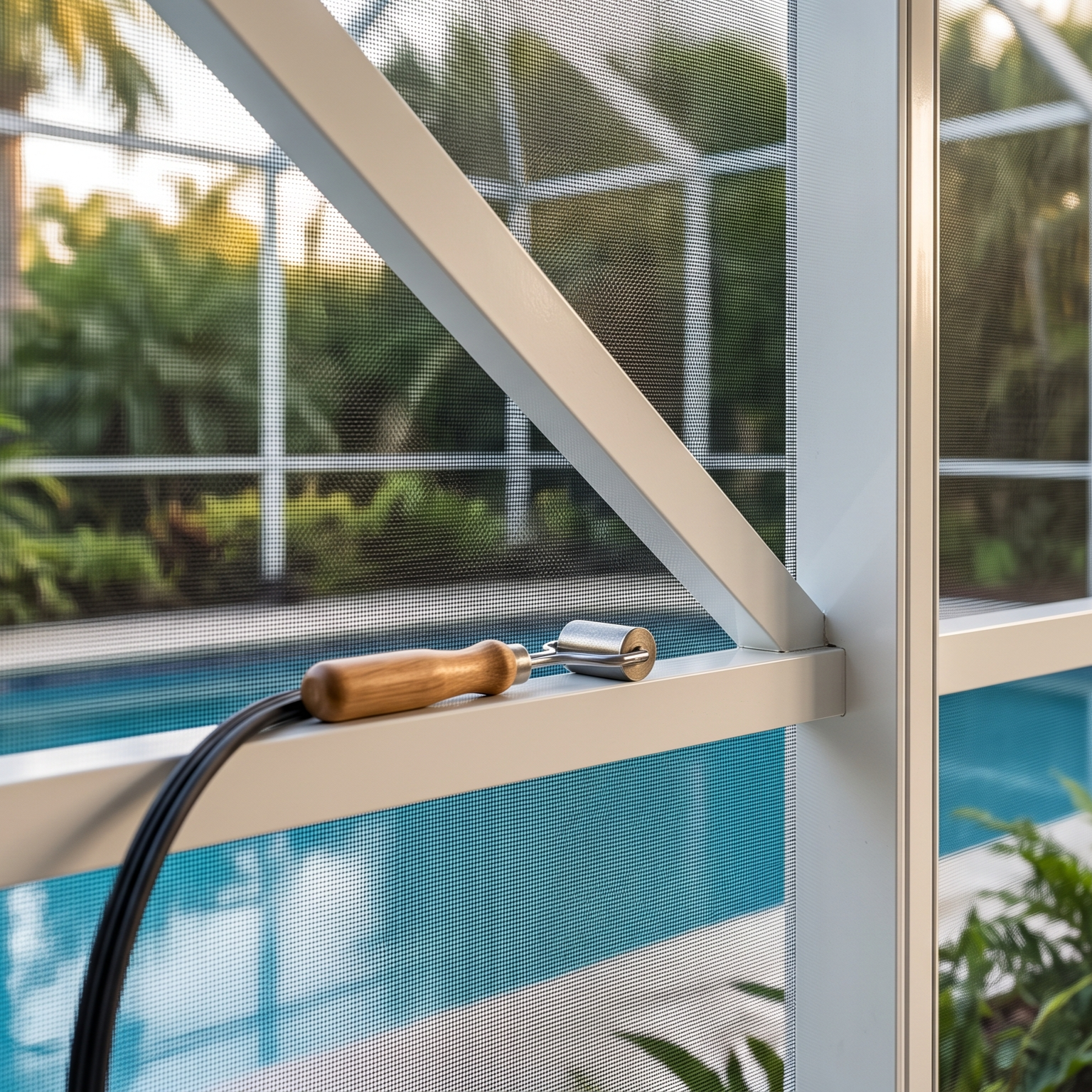
When a lanai or pool cage screen gets damaged, the natural question is whether you can just repair the affected spot or whether the whole enclosure needs rescreening. It's a practical decision, and the right answer depends mostly on how much of the screen is affected and the overall condition of the screening. Understanding the difference helps you avoid both unnecessary full replacements and repeated patches that don't hold.
The Basic Principle: Isolated vs. Widespread
The guiding principle is whether the damage is isolated or widespread. If the problem is confined to one panel or a small area, and the rest of the screen is still sound, a repair makes sense. If the damage spans multiple panels or the screening overall is degraded, and near the end of its life, full replacement is the better choice. The signs below help you place your situation on that spectrum. A single tear on an otherwise good screen is a repair; an enclosure where the screen is failing in several places is a rescreen.
When a Repair Makes Sense
A repair is the right call when the damage is limited and the surrounding screen is in good shape. Good candidates for repair include a single torn or popped-out panel, a small hole or rip in one section, or damage confined to one area — say from a stray ball, a branch, or a pet — while the rest of the enclosure's screening is still strong and intact. In these cases, replacing or re-securing the affected panel restores the enclosure without the cost of a full rescreen. The key is that the rest of the screen still has good life left, so fixing the one problem spot solves it.
When Full Replacement Is the Answer
Full replacement (rescreening) is the better choice when the damage or deterioration is widespread. Several situations point this way: multiple panels are torn, sagging, or failing; the screening has become brittle, faded, and degraded from years of sun exposure across the whole enclosure; or the screen is simply old and near the end of its life. In these cases, repairing one spot is a losing game, because the surrounding screen is also weak and another tear is likely to appear soon after. When the screening as a whole has aged out, rescreening the enclosure gives you a fresh, uniform, strong screen rather than a patchwork that keeps failing.
| Situation | Repair or replace? |
|---|---|
| One torn or popped panel, rest sound | Repair |
| Small hole or rip in one area | Repair |
| Multiple panels torn or sagging | Replace (rescreen) |
| Screen brittle, faded, sun-degraded | Replace (rescreen) |
| Screen old, near end of life | Replace (rescreen) |
| New tears keep appearing after patching | Replace (rescreen) |
The Telltale Sign: Age and Overall Condition
Beyond counting damaged panels, the overall condition and age of the screening are the deciding factors. Screen material degrades over time, especially under intense sun — it becomes brittle, weak, and faded, losing the strength that holds it together. When the screening across the enclosure has reached that degraded state, it doesn't matter that only one panel has torn so far; the rest is close behind. A useful test is what happens after a repair: if you patch one spot and another panel tears shortly after, that's a strong sign the whole screen has aged out, and a full rescreen is the smarter, more lasting solution. A sound screen that's just been damaged in one spot is different from a screen that's failing from age.
TIP: A lanai screen needs only a repair when the damage is isolated — a single torn or popped panel, a small hole, or one section affected — and the rest of the screen is still in good condition. It needs full replacement (a rescreen) when the damage is widespread: multiple panels torn or sagging, screen that's brittle and degraded from sun and age across the enclosure, or screening that's near the end of its life so patching one spot just means another tears soon after. The deciding factors are how much of the screen is affected and the overall condition and age of the screening. Isolated damage on sound screen is a repair; widespread or age-related deterioration calls for a rescreen.
Why Getting It Right Saves You
Making the right repair-or-replace call saves both money and frustration. Repairing isolated damage on a sound enclosure avoids the unnecessary cost of a full rescreen. But repeatedly patching a screen that's degraded from age is a losing proposition — each patch holds while a new tear appears elsewhere, so you spend on repairs that don't solve the underlying problem, when a rescreen would have given you a lasting fix. Matching the solution to the actual condition — repair for isolated damage on a good screen, replacement for widespread or age-related deterioration — gives you the best value. A screen professional can assess your enclosure and tell you honestly whether a repair will hold or a rescreen is the better investment.
Frequently Asked Questions
How do I know if my lanai screen needs repair or replacement?
It depends on how much is affected and the screen's overall condition. If the damage is isolated — one torn panel or a small hole — and the rest of the screen is sound, a repair makes sense. If multiple panels are damaged, or the screening is brittle, faded, and degraded from age and sun across the enclosure, a full rescreen is the better choice. Isolated damage on a good screen is a repair; widespread deterioration is a replacement.
When is a screen repair enough?
A repair is enough when the damage is limited to one panel or a small area and the surrounding screen is still strong and in good condition — for example, a single tear from a stray ball, branch, or pet. Replacing or re-securing just the affected panel restores the enclosure without a full rescreen, as long as the rest of the screen still has good life left.
When should I rescreen the whole enclosure?
Rescreen when the damage or deterioration is widespread: multiple panels torn or sagging, screening that's become brittle and faded from years of sun across the enclosure, or screen that's simply old and near the end of its life. In these cases, patching one spot doesn't last because the rest of the screen is also weak, so a full rescreen gives you a fresh, uniform, lasting result.
Why does patching one panel not always work?
Because if the surrounding screen is also degraded by age and sun, patching one spot just means another panel will tear soon after. The repair itself may hold, but the weak screen around it keeps failing. When new tears keep appearing after a patch, it's a strong sign the whole screen has aged out and needs a full rescreen rather than continued spot repairs.
How long does a lanai screen last before it needs replacing?
It varies with the screen type, sun exposure, and conditions, but screen material degrades over time — especially under intense sun, which makes it brittle, weak, and faded. There's no single number, but when the screening across the enclosure has reached that degraded state, it's near the end of its life. Checking the condition of panels away from any damage tells you whether the screen has aged out.
Can a professional tell me whether to repair or replace?
Yes. A screen professional can assess your enclosure — how much is damaged and the overall condition and age of the screening — and tell you honestly whether a repair will hold or a full rescreen is the better investment. This helps you avoid both unnecessary full replacements and repeated patches that don't last, matching the solution to your screen's actual condition.
Match the Fix to the Screen's Condition
Whether your lanai screen needs a repair or a full replacement depends on how much it’s affected and the overall condition of the screening. Isolated damage on screen that's still sound is a repair; widespread tears or screening that's brittle and aged-out across the enclosure calls for a rescreen. The telltale sign is what's happening beyond the damaged spot — if the rest of the screen is failing too, a rescreen lasts far better than chasing patches.
Not sure if your lanai needs a repair or a full rescreen — Get it assessed for an honest repair-or-replace recommendation. Lanai Guy serves Brandon, Riverview, and the greater Tampa area. Call (813) 316-5971.