



Screen Repair vs Full Rescreen: Which Does Your Lanai Need?
QUICK ANSWER: A spot screen repair makes sense when the damage is limited — one or two torn panels on a screen that's otherwise sound and not too old. A full rescreen makes sense when the screen is failing everywhere: brittle, sagging, discolored, or pulling loose across many panels, or when patching keeps becoming a recurring chore. The deciding question is whether the rest of the screen has life left. If it does, repair the damage; if the whole material is worn out, rescreening is the better value.
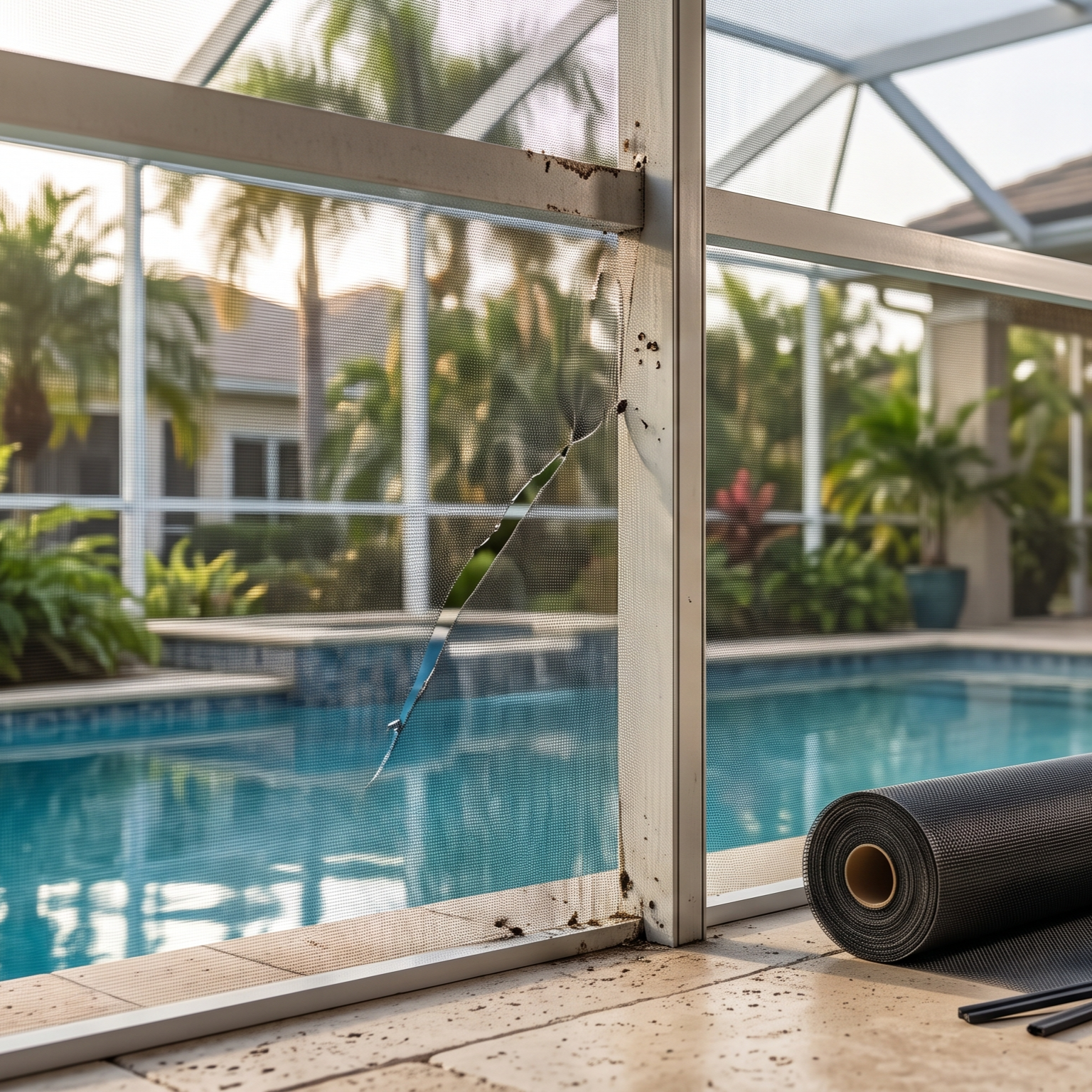
A pool cage or lanai with a few ripped panels sends a lot of Florida homeowners into the same debate: patch the holes, or just redo the whole thing? Both can be the right answer — it depends entirely on the condition of the screen that isn't torn. Spending on a rescreen when two panels would do is a waste; patching panel after panel on a screen that's at the end of its life is throwing good money after bad. Here's how to tell which situation you're in.
When a Spot Repair Is the Right Call
A targeted repair replaces the screen in just the damaged panels (or re-secures a section that's pulled loose) while leaving the rest of the enclosure alone. It's the right choice when the damage is the exception, not the rule.
Repair makes sense when:
Only one or a few panels are torn, often from a stray branch, a ball, a pet, or a recent storm.
The surrounding screen is still in good shape — taut, flexible, and not discolored.
The enclosure is relatively young, and the rest of the material has years left.
The damage is isolated to a spot, like a hole or a section that popped out of its track.
In these cases, replacing a couple of panels restores the enclosure for a fraction of the cost and time of a full rescreen, and the patched panels blend in fine because the rest of the screen is still sound.
When a Full Rescreen Is the Right Call
A full rescreen replaces all the screen panels across the entire enclosure. It's the better move when the screen material itself — not just one spot — has reached the end of its service life.
Rescreening makes sense when:
The screen is brittle and tears easily when you touch it, a sign the sun has degraded it.
Panels are sagging, loose, or pulling out of their tracks in multiple places.
The screen is widely discolored, faded, or looks generally worn.
You're patching tears every few months — new ones keep opening up.
Several panels are already damaged, so a "repair" would mean redoing much of the cage anyway.
The tell is that the failures are spreading. When the screen is old enough to go brittle, fixing one panel just shifts the stress to the next weak spot, and you end up back on the ladder soon after. At that point, rescreening the whole enclosure costs less over time than an endless series of patches, and you get a uniform, taut result instead of a patchwork of old and new.
The Florida Factor: Why Screen Wears Out
In the Tampa area, screen enclosures take a beating that shortens their life. Relentless UV from the sun gradually breaks down the screen material, making it brittle and prone to tearing — which is why an older cage can seem to fail all at once. Storms and high winds add sudden damage, stretching and ripping panels or popping them from their tracks. And salt air near the coast is hard on the metal hardware and fasteners, too. All of this means a screen's age and sun exposure matter as much as any single tear when you're deciding between repair and rescreen — a five-year-old cage with one storm tear is a clear repair, while a fifteen-year-old cage with one tear is often a rescreen waiting to happen.
How to Decide
| Situation | Best choice |
|---|---|
| One or two torn panels, rest of screen sound | Spot Repair |
| Recent storm damage on an otherwise young cage | Spot Repair |
| Screen brittle and tearing when touched | Full rescreen |
| Sagging or loose panels in several places | Full rescreen |
| Widespread fading or discoloration | Full rescreen |
| Patching tears every few months | Full rescreen |
The simplest test is to gently check the screen away from the obvious damage. If it's still taut and flexible and the tear is clearly a one-off, repair it. If the material feels brittle, looks faded, or is sagging and pulling loose in more than one spot, the whole screen is telling you it's near the end, and a rescreen is the smarter spend. A quick inspection can confirm which way it leans before you commit. It also helps to think about how long you plan to stay in the home and how much the enclosure gets used — if the cage is borderline and you spend most of the year out by the pool, a full rescreen buys years of worry-free use, while a rarely used enclosure with one tear may only need the patch. Either way, matching the work to the screen's real condition is what keeps you from overspending or repeating the repair.
Frequently Asked Questions
Should I repair or rescreen my pool cage?
It depends on the condition of the screen that isn't torn. If only one or two panels are damaged and the rest is still taut, flexible, and not faded, a spot repair is the right, lower-cost choice. If the screen is brittle, sagging, discolored, or failing in several places, a full rescreen is a better value because patches won't hold up on worn-out material.
How do I know if my screen is too old to repair?
Gently feel the screen away from the tear. If it's brittle and rips when you touch it, or it's noticeably faded and sagging, the material has been degraded by the sun and is nearing the end of its life. Repairing one panel on screen like that just moves the problem to the next weak spot, which points to a full rescreen instead.
Why does my screen keep tearing in new places?
Because the screen material has aged and gone brittle, usually from years of UV exposure. Once it reaches that point, the whole screen is weak, so fixing one tear simply shifts the stress to the next fragile section, and a new tear opens up. Recurring tears across the enclosure are a strong sign it's time to rescreen rather than keep patching.
Is a full rescreen worth it over repairs?
When the screen is widely worn, yes. Patching brittle, failing screen leads to repeat repairs that add up, while a full rescreen restores the entire enclosure at once with uniform, taut material. If the screen is still sound and the damage is isolated, though, a repair is the better value — rescreening is worth it specifically when the material itself is at the end of its life.
How long does the screen on a Florida enclosure last?
It varies with sun exposure, weather, and the screen type, but Florida's intense UV, storms, and salt air shorten screen life compared to milder climates. Many enclosures need rescreening after several years, as the material becomes brittle and fades. Age and sun exposure are big factors, which is why an older cage with even a single tear is often ready for a full rescreen.
Let the Good Screen Decide
The repair-or-rescreen question really answers itself once you look past the obvious tear at the screen around it. Sound, taut, recent screen with isolated damage calls for a simple repair. Brittle, sagging, faded screen that keeps failing calls for a full rescreen, because anything less just buys a few weeks before the next tear. Check the condition, weigh the age and sun exposure, and you'll spend on exactly what the enclosure needs — no more, no less.
Not sure if your enclosure needs a patch or a full rescreen? — Get it inspected and an honest recommendation for your cage. Lanai Guy serves Brandon, Riverview, and the greater Tampa area. Call (813) 316-5971.