



Pool Cage Corrosion: What Rusts and How to Stop It
Your pool cage is built from aluminum, and aluminum does not rust the way steel does. So the brown streaks running down a frame member, the chalky white powder near a bolt, or a screen panel that suddenly rides loose can feel like a contradiction. It is not. The aluminum is doing its job. The trouble almost always starts somewhere the aluminum is touching something else, and once you know where to look, most of it is preventable with a garden hose and a little attention.
QUICK ANSWER: A pool cage frame is aluminum, which forms a protective oxide layer instead of rusting. The rust streaks and stains you see usually come from steel fasteners corroding, or from galvanic corrosion where a steel screw sits in aluminum with moisture present. Corrosion attacks the fasteners, the base where the frame meets the deck, and any spot hit by pool chemicals or lawn overspray. Rinsing the frame, keeping chemicals off it, fixing standing water, and using stainless fasteners on repairs prevent most of it.
Aluminum Versus Steel: Why One Rusts and One Does Not
Rust is specifically iron oxide. It only forms on metals that contain iron, which means steel and cast iron. Aluminum contains no iron, so it cannot produce rust at all. What aluminum does instead is oxidize: the surface reacts with air and forms a thin, tight layer of aluminum oxide that actually shields the metal underneath. That layer is why a bare aluminum frame can sit outdoors for decades without dissolving.
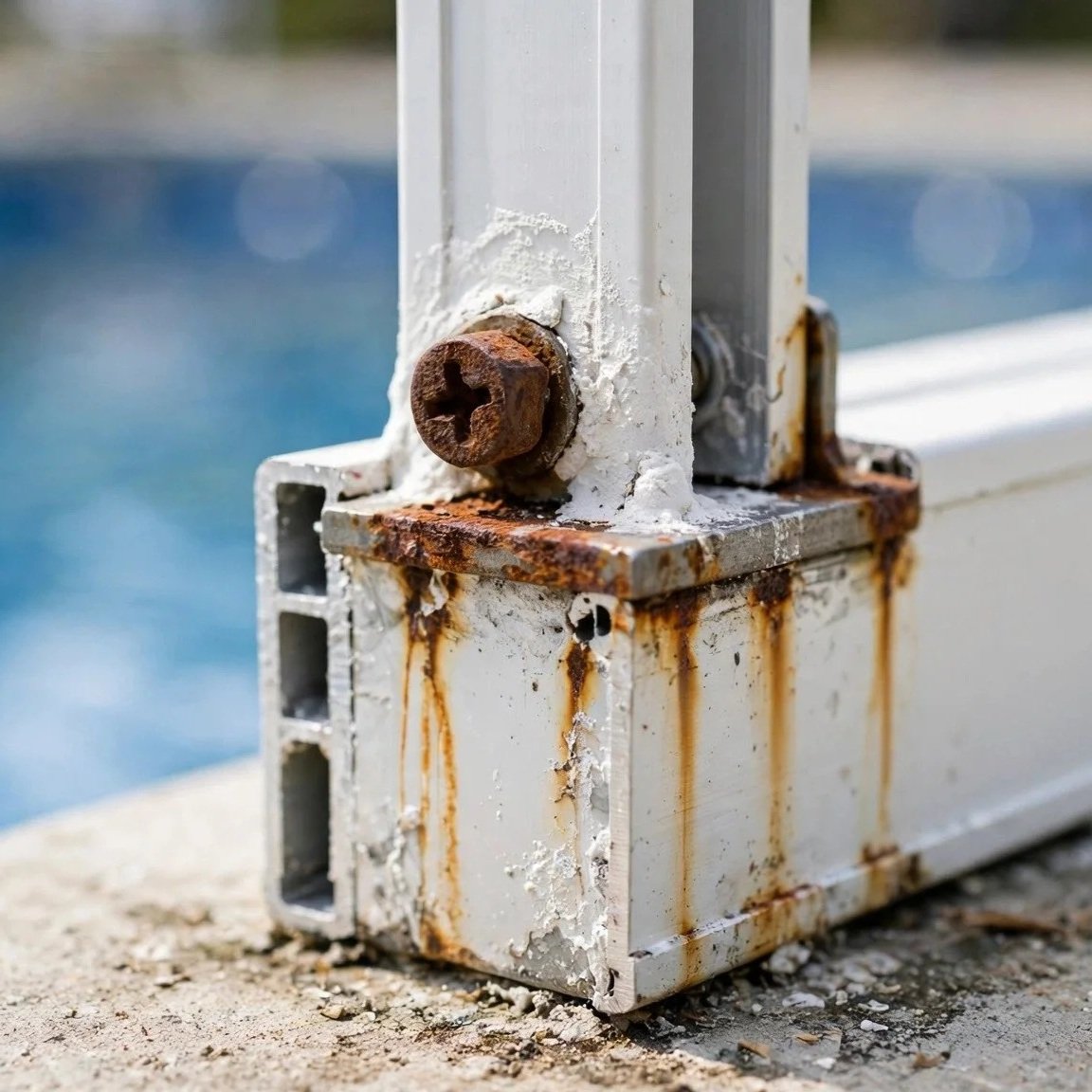
The confusion comes from the fasteners. A screen enclosure is held together by hundreds of screws, bolts, tek screws, and brackets, and not all of them are aluminum or stainless. Plain or plated steel hardware was common on older builds and still shows up in cheap repairs. Steel rusts freely in humidity, and the rusty runoff washes down the aluminum, staining the frame and the white screen mesh below it. So the frame looks like it is rusting when the real culprit is a fifty-cent screw.
Why Aluminum Still Corrodes Anyway
The protective oxide layer is tough, but it is not indestructible, and aluminum has two failure modes worth understanding.
Pitting: When something breaks through the oxide layer in a small spot and keeps it wet, aluminum can corrode locally. That shows up as tiny craters or a chalky, powdery white residue clustered in one area. Pitting is common where chlorine or salt sits against the metal, because those chemicals aggressively attack the oxide film faster than it can reform.
Galvanic Corrosion: Put two different metals in direct contact with moisture between them and you build a weak battery. One metal becomes the anode and gives up material to the other. A steel screw driven into an aluminum frame, with rain or humidity as the connector, is the classic setup. The aluminum around the fastener corrodes, the fastener itself may rust, and the joint slowly loses its grip. This is the single most damaging process on a pool cage, because it attacks the exact points that hold the structure together.
Think of galvanic corrosion like two people sharing one blanket on a cold night: one ends up giving up warmth to the other, and the metal that loses out is the one being sacrificed at every joint.
Where Corrosion Actually Attacks
Corrosion is not random. It collects in a handful of predictable spots, and knowing them tells you where to look and where to rinse.
The Fasteners: Every screw and bolt is a potential trouble point, especially where dissimilar metals meet. Fasteners near the pool deck get the worst of it because they catch splashout and sit in the dampest air.
The Base Where the Frame Meets the Deck: The bottom track and the anchor points where the cage bolts into the concrete pool deck trap water. Rain runs down the frame and pools at the base, irrigation soaks the concrete, and that moisture wicks up into the joint and lingers. A base that never fully dries is a base that corrodes.
Chemical Splash Zones: Anywhere pool water reaches the frame carries chlorine or salt. Salt systems are especially rough on aluminum and hardware because salt keeps drawing moisture and never lets the surface dry out. The frame members closest to the waterline see this constantly.
Fertilizer and Irrigation Overspray: Lawn fertilizer is loaded with corrosive salts, and a sprinkler head aimed at the cage delivers them straight onto the frame day after day. Iron-containing fertilizers also leave their own orange staining that looks exactly like rust.
What Corrosion Does to the Enclosure
Left alone, corrosion moves from cosmetic to structural, and the progression is worth taking seriously.
At first it is stains: rust streaks bleeding down the frame from a corroding screw, or orange fertilizer marks, or chalky white blooms. Ugly, but the cage is still sound.
Next, the fastener connections weaken. A screw sitting in corroded aluminum no longer bites the way it did. Screen panels start to loosen and pop out of their tracks, which is often the first thing a homeowner actually notices. Beams and uprights held by degraded hardware lose rigidity.
WARNING: Corroded fasteners and weakened joints can let panels or even structural beams give way, which is both a safety hazard and a storm hazard. A cage in that condition should be inspected by a qualified pro before a major storm arrives, and any work at height on the frame is fall-hazard territory.
How to Prevent Pool Cage Corrosion
The good news is that prevention is mostly about keeping the frame dry and clean, and none of it is complicated.
TIP: A plain-water rinse with a garden hose flushes off salt, chlorine, pollen, and fertilizer residue before they can sit and attack the metal. Pay attention to the base and the lower frame members where splashout lands, since this one habit does more than any product.
Keep Chemicals Off the Metal: Try to keep chlorine and salt splashout from drying repeatedly on the same spots. If you shock the pool, rinse any frame areas that got splashed. The goal is to never let corrosive chemistry dry and concentrate on the aluminum.
Fix Leaks and Standing Water at the Base: If water pools at the anchor points or the deck stays wet against the frame, find out why. A dripping fixture, poor deck drainage, or settling that traps water all feed base corrosion. Getting the base to dry between wettings matters more than most people realize.
Aim Sprinklers Away: Reposition any irrigation head that sprays the cage. You want lawn water on the lawn, not delivering fertilizer salts onto the frame several times a week.
Use Stainless or Coated Fasteners on Repairs: When a screw or bracket gets replaced, insist on stainless steel or a quality coated fastener rated for exterior and poolside use. Swapping plain steel hardware for stainless removes the galvanic mismatch that drives the worst joint corrosion. This is where a cheap repair quietly plants the seed for future problems.
Touch Up Chips: If the frame finish gets chipped or scratched down to bare metal, a dab of matching touch-up paint reseals it. Bare aluminum will form its own oxide, but a coated frame relies on that coating to shrug off chemicals, so keeping it intact helps.
Signs It Is Time to Act
Some corrosion is cosmetic, and some is a warning. Watch for these:
Rust streaks running from fastener heads or brackets down the frame or onto the screen.
Loose or backing-out fasteners, or screws you can wiggle by hand.
Chalky white pitting or powdery residue clustered on a frame member.
Screen panels popping out of their tracks, which often signals that the fasteners holding the track have lost their grip.
A single stained screw is a maintenance item. Multiple loose fasteners, visible pitting on structural members, or panels that keep releasing point to corrosion that has reached the connections, and those deserve a professional look.
Repair Versus Rescreen or Rebuild
Not every corroded cage needs the same fix, and matching the response to the damage keeps you from overspending or under-fixing.
If the corrosion is limited to surface stains and a few bad fasteners, this is a repair. Swap the corroded hardware for stainless, clean the frame, reseat any loose panels, and the enclosure is back in shape.
If the corrosion has stained the screen or degraded the mesh alongside frame issues, a rescreen paired with hardware replacement often makes sense, since the screen has to come off to reach some connections anyway.
If corrosion has eaten into the structural members themselves, or enough fasteners have failed that the frame has lost rigidity, that moves toward a partial or full rebuild. Aluminum with deep, widespread pitting on a load-bearing beam cannot simply be painted over. A pro can tell the difference between a frame that needs new hardware and one that needs new members, which is exactly the judgment call worth getting right before a storm season tests it.
A word on doing this yourself: inspecting the base and swapping a low screw is reasonable homeowner work. Anything that involves working at height on the cage, or handling structural members, is fall-hazard territory and pro work. And go easy with a pressure washer if you use one at all, because too much force can drive water into the very connections you are trying to protect, or tear the screen.
Frequently Asked Questions
Does a screen or salt-water pool corrode a cage faster than a chlorine pool?
Salt-water systems tend to be harder on aluminum and hardware. A salt pool keeps a fine salt residue in the splash zone, and salt is hygroscopic, meaning it pulls moisture from the air and keeps the surface damp long after the splash dried. Chlorine attacks the oxide layer more sharply in the moment, but it evaporates and disperses. The practical takeaway is that salt-pool owners benefit most from frequent frame rinsing.
Can I stop galvanic corrosion without replacing the fasteners?
Removing the metal mismatch is the real fix, but where a fastener has to stay, an isolating barrier helps. Nylon or rubber washers, or a dab of dielectric grease at the contact point, keep the two metals from touching directly and break the electrical path that galvanic corrosion needs. It is a stopgap on existing hardware, not a substitute for stainless on new work.
Is white powder on the frame the same thing as rust?
No. White or gray chalky powder is aluminum oxide or aluminum corrosion byproduct, and it means the aluminum itself is pitting, usually from chemical exposure. Orange-brown staining is iron oxide from a steel component or from iron in fertilizer. Telling them apart matters because white pitting points to the frame metal while rust streaks point to the hardware.
Will powder-coating the frame prevent corrosion?
A quality powder-coat finish adds a real barrier that keeps chemicals and moisture off the aluminum, and it holds up well when intact. The catch is that any chip or drilled hole breaks the seal, and corrosion can then work under the coating out of sight. Coated frames still need rinsing and prompt touch-up of any breach, so the finish reduces maintenance rather than eliminating it.
How often should the frame get a real rinse?
There is no single number, because it depends on how much splashout and overspray the cage catches. A frame near a heavily used salt pool with sprinklers nearby benefits from a rinse every week or two, while a sheltered cage with well-aimed irrigation can go longer. The honest gauge is the metal itself: if you see residue drying on the frame, it is due.
Does anodized aluminum resist corrosion better than mill-finish framing?
Anodizing thickens and hardens the natural oxide layer through an electrochemical process, so anodized aluminum resists pitting better than raw mill-finish metal. Most residential cage framing is painted or powder-coated rather than anodized, so the practical protection on a typical enclosure comes from the coating and from keeping chemicals off it, not from an anodized layer.
Book a free onsite corrosion and hardware inspection — catch weak joints before a storm does. Lanai Guy serves Brandon, Riverview, and the greater Tampa area. Call (813) 316-5971.