



Pool Cage Screen Panels Popping Out? The Real Fix
A screen panel that bows out of its frame, or drops free entirely, is one of the most common calls on a pool enclosure. It looks alarming, and it does invite trouble, but the cause is almost always small and specific. Understanding how a panel is held in place first makes the repair question much easier to answer, because a popped panel is rarely the frame failing. It is the connection between the screen and the frame letting go.
QUICK ANSWER: Screen panels pop out when the rubber spline that pins the mesh into the frame's groove dries out, shrinks, or was undersized, so the screen loses tension and wind pressure lifts it free. In most cases, a single panel can be re-splined or rescreened on its own without touching the rest of the cage.
How A Panel Is Actually Held In The Frame
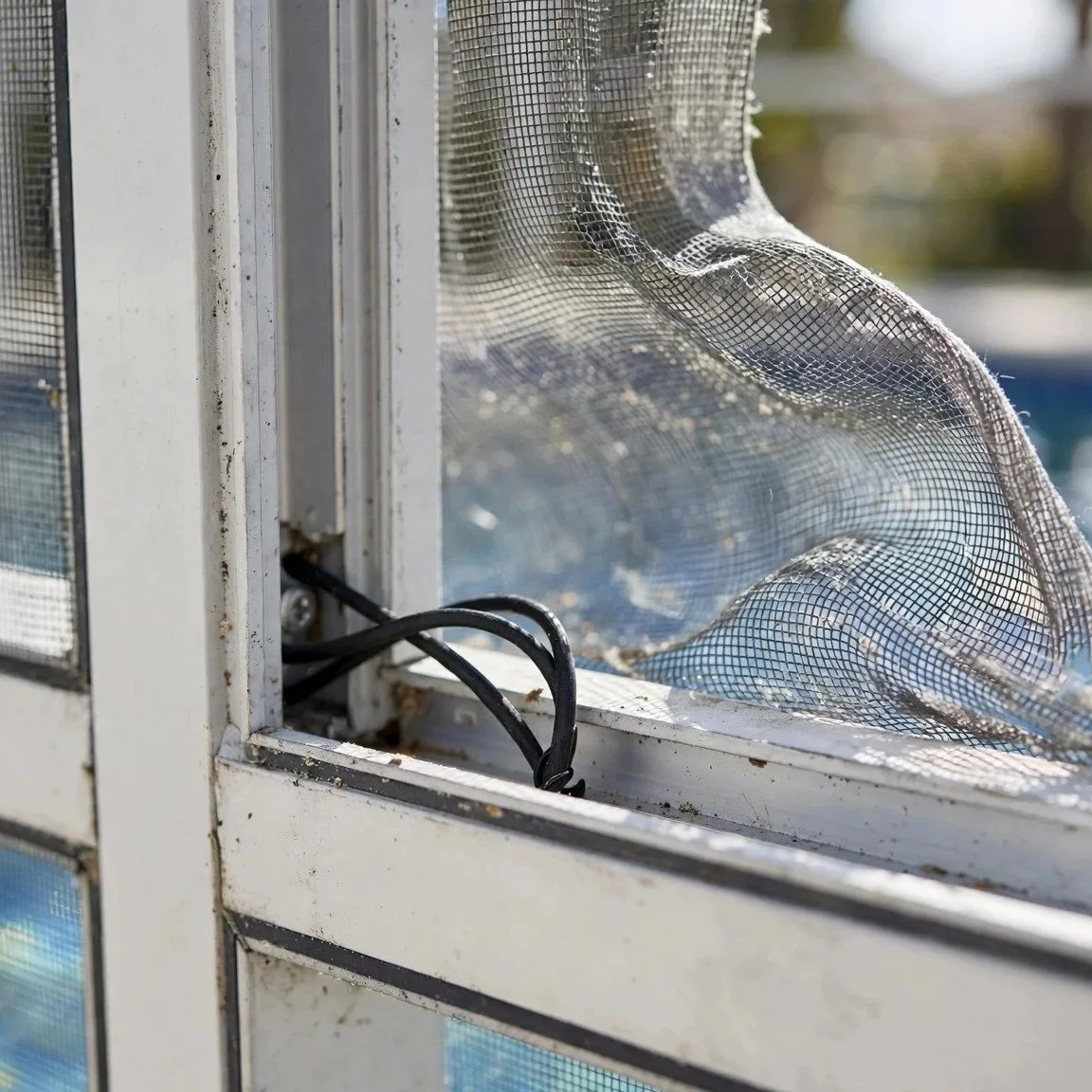
Each opening in a pool cage is a rectangle of aluminum. Along the inside face of every bar runs a narrow groove called the spline channel. The screen mesh is stretched across the opening, laid over that channel, and then a length of flexible cord, the spline, is rolled down into the groove on top of it. The spline wedges the mesh into the channel and holds it there by friction and compression, the same way a rubber band wedged into a slot grips whatever is under it.
Two things keep that panel flat and secure. The first is the spline itself, sized to fill the groove snugly. The second is tension, the slight stretch put into the mesh as it is installed so the finished panel sits drum-tight rather than slack. When both are right, the panel resists wind, bumping, and the daily push and pull of temperature swings. When either weakens, the panel starts to loosen at a corner or an edge, and from there it is only a matter of time before something pushes it out.
The spline is doing the real work: The spline is the part people never think about until it fails. It is a small rubber or vinyl cord, and it carries the entire hold of the panel. A frame in perfect condition with brand-new mesh will still shed its screen if the spline is wrong or worn, which is why so many pop-outs trace back to this one inexpensive part.
Why Panels Pop Out In The First Place
Several failures lead to the same result, and often two or three stack up on the same panel.
Dried, shrunken, or undersized spline: Rubber and vinyl lose their flexibility as they age and heat up. As the spline hardens, it shrinks slightly and pulls down into the groove, loosening its grip on the mesh. An undersized spline causes the same problem from day one, sitting loosely in a channel it was never quite big enough to fill. Either way, the mesh is no longer clamped hard, and the panel edge lifts.
Brittle, UV-degraded screen: Sunlight breaks down the polymer in standard fiberglass mesh over years of exposure. The screen stiffens, grows brittle, and stops holding tension. A brittle panel cannot flex with wind load, so instead of bowing and recovering, it cracks at the edge or tears free of the spline. A screen that crumbles or powders when you rub it has reached this stage and will keep failing no matter how good the spline is.
A loose, bent, or racked frame: If a bar has been bumped, corroded at a fastener, or knocked out of square, the spline channel no longer holds a consistent depth around the opening. The mesh loses grip wherever the groove has widened or twisted. This is the one cause that a re-spline alone will not cure, because the channel itself is the problem.
Wind pressure finding the weak panel: Wind does not lift a whole cage evenly. It finds the single panel with the least tension or the most worn spline and works that one loose, gust by gust. A partial lift becomes a full pop-out, and once a panel is flapping, it tugs at its neighbors. A cage often loses one panel first, then a second nearby, because the first failure was the weak link and the wind found it.
A poor original install: Panels installed with too little tension, the wrong spline diameter, or mesh cut too short to seat properly will fail early no matter how mild the conditions. If several panels on the same run loosen around the same time, and the frame is sound, the original screening is usually the reason.
Can One Panel Be Replaced On Its Own?
In most cases, yes. Screen panels are independent units. Each opening has its own spline channel and its own run of mesh, so a single failed panel can be re-splined or fully rescreened without disturbing the panels around it. If the mesh is intact and only the spline has failed, the existing screen can sometimes be re-tensioned and re-splined in place. If the mesh itself is brittle, torn, or degraded, that panel gets a fresh piece of screen and new spline.
The situation changes when the failure is not isolated. If several adjacent panels are all brittle and popping, they are the same age and the same exposure, and replacing them one at a time means returning again and again as the next one goes. At that point, rescreening the whole side, or the whole cage, costs less effort overall and gives you panels that all age together from the same starting point. A useful line to watch is how the mesh behaves across the enclosure. If one panel failed and the rest are still flexible and tight, fix the one. If the whole structure's screen is stiffening, plan for the larger job.
Matching the screen type and spline size: A single-panel repair only holds if the replacement parts match. Mesh comes in different weaves, standard 18-by-14 fiberglass for general use, and finer no-see-um mesh woven tightly enough to keep out the smallest biting insects. Mixing a fine-mesh panel next to standard mesh is not only visually mismatched, but the two weaves also have different wind loads and tension behavior. Spline also comes in specific diameters keyed to the channel. Too thin and the panel repeats the pop-out; too thick and it will not seat, or it bulges the mesh. Getting both right is what separates a repair that lasts from one that fails again next season.
Why higher tension and proper spline pay off: A panel installed drum-tight with correctly sized spline resists the exact forces that pop panels out. Tension gives the mesh somewhere to go under a gust and then pull back flat, rather than staying slack and catching wind like a sail. A snug spline keeps that tension locked in. The difference between a rushed repair and a proper one is invisible on day one and obvious a year later, when the good panel is still flat, and the rushed one is bowing again.
What A Popped Panel Lets In
A gap where a panel used to sit is not just cosmetic. It is an open door for the insects the screen was there to stop, and for leaves, pollen, and debris that then collect around the pool and deck. Left open, the opening also lets larger animals test the gap, and a small tear at a loosened corner tends to grow as wind keeps working it. Reseating or replacing the panel promptly keeps a minor repair from becoming a bigger one and keeps the enclosed space doing its job.
Prevention And When To Call A Pro
You can slow pop-outs considerably. Rinse the screens periodically so grit and salt do not accelerate spline and mesh aging. Keep landscaping trimmed back so branches do not rub or puncture panels. Catching a loose corner early is a five-minute fix; catching it after a pop-out is a full panel.
TIP: Walk the cage a couple of times a year and press gently on each panel, looking for any that flex loose at a corner or show spline creeping out of its groove, and reseat or re-spline them before wind finds them. Catching a loose corner early is a five-minute fix.
A note on safety. Reseating or re-splining a low, reachable wall panel is a reasonable homeowner task, provided the replacement spline matches the channel and the mesh is tensioned properly rather than left slack. Anything higher up changes the calculation. Working on the roof panels of an enclosure, or on a two-story cage, means working at height on an aluminum structure that was never meant to bear a person, and that is a genuine fall risk and a job for a pro with the right access equipment. When in doubt about reach, or when the frame itself looks bent or corroded, bring in someone who repairs cages for a living.
Frequently Asked Questions
How can I tell if it is the spline or the screen that failed?
Pinch a corner of the loose mesh and pull gently. If the screen is supple and springs back, the spline let go, and reseating the mesh with new spline will hold it. If the mesh feels stiff, cracks, or sheds a fine powder when you rub it between your fingers, the screen itself has aged out, and that panel needs fresh mesh, not just spline. The powder is degraded polymer coating, a reliable sign the panel is past re-splining.
Is there more than one spline size, and does it matter which I use?
Yes. Spline is sold by diameter in small increments, commonly measured in thousandths of an inch, and the correct size fills the channel snugly against the mesh you are using. Finer no-see-um mesh is thicker than standard screen, so it often needs a slightly smaller spline in the same channel to leave room for the extra mesh bulk. Using leftover spline from an unrelated project is the most common reason a repaired panel pops right back out.
Can I reuse the old spline if it looks intact?
It is not worth it. Even spline that looks fine has usually taken a compression set, meaning it has hardened in the shape of the groove and lost the springiness that grips the mesh. Fresh spline is inexpensive relative to redoing the panel, and reusing old cord is the shortcut most likely to send you back up the ladder within months. Always roll in new spline on a repaired panel.
Will one popped panel damage the ones next to it?
It can. A loose panel flaps in wind and tugs on the shared bar it splines into, which can work the adjacent panel's spline loose at the connecting edge. A fully missing panel also removes the wind break that the enclosure's paneling provides as a whole, so neighboring panels take a harder, more direct gust load. Reseating a popped panel quickly limits the failure to one opening instead of letting it spread down the run.
Do darker screens or certain colors last longer against sun damage?
Screen color affects how the mesh reads visually more than how long it lasts, but the coating and material grade matter a great deal. Standard fiberglass mesh carries a vinyl coating that shields the strands, and heavier or premium mesh grades hold that coating and their tension longer under constant sun. When rescreening a panel exposed to strong direct sun for most of the day, a higher-grade mesh is worth specifying so it ages at the same slow rate as shaded panels rather than failing years ahead of them.
What should I do with a popped panel before a repair happens?
Do not force the loose mesh back under the spline with a screwdriver, which tears the screen and widens the channel. If the panel is only bowed at a corner, gently press it back into plane and leave it. If it has dropped free, roll or fold the loose mesh loosely and tape it clear of foot traffic rather than letting it flap, since flapping abrades the edge and enlarges any tear. Cover the opening temporarily with a light mesh or netting if insects are a concern until the panel is properly reseated.
Get a loose or popped panel reseated before wind spreads the damage — a quick re-spline now saves a full rescreen later. Lanai Guy serves Brandon, Riverview, and the greater Tampa area. Call (813) 316-5971.