



How Much Sun Do Solar Screens Actually Block?
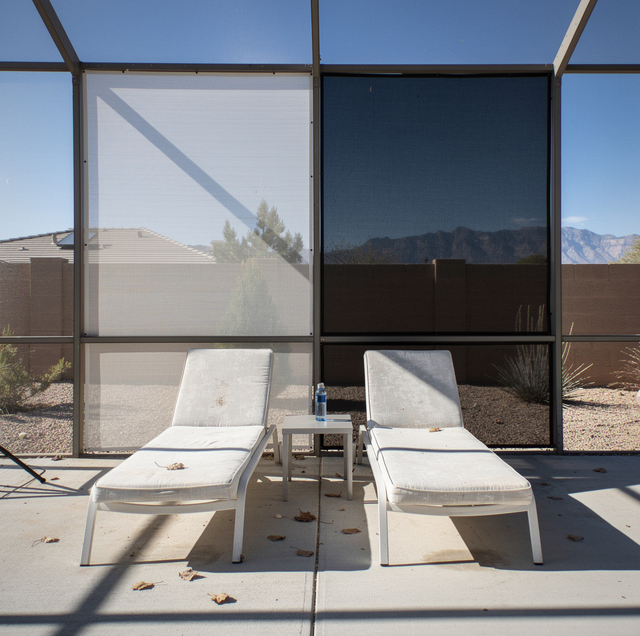
By mid-afternoon, one side of a screened pool deck can feel noticeably hotter than the other, even though both sides sit under the same aluminum roof. The roof isn't the difference. The screen is. Standard insect mesh is woven to keep bugs out and let light and air move through with almost nothing slowing them down, which means it does very little to cut the heat, glare, and UV pouring through it. Solar screen is a different product built for a different job: a denser, tighter weave designed to intercept a real share of what the sun sends through before it reaches the deck, the furniture, or you.
QUICK ANSWER: Solar screen mesh commonly blocks 70 to 90 percent of solar heat, glare, and UV, depending on how tight the weave is, compared to the very limited blocking a standard insect screen provides. That performance comes from a denser weave and darker, heavier strands, and it comes at a cost: less see-through clarity and somewhat reduced airflow through the panel. Denser weaves block more sun and cut visibility further, so picking a density is a real trade-off, not an automatic upgrade.
How Solar Screen Mesh Is Actually Built
Every screen, whether it's ordinary insect mesh or a solar-rated fabric, is defined by two things: how tightly the strands are woven and how much of the panel is open space between them. Manufacturers call that open space the openness factor, and it's the single number that predicts how much sun a given mesh lets through. Standard fiberglass insect screen has a relatively high openness factor because its whole job is to move air and remain nearly invisible. It stops bugs, not sunlight.
Solar screen inverts that priority. The strands are thicker, often a coated polyester or vinyl-clad fiberglass in a darker shade like charcoal or bronze, and they're woven much closer together, leaving far less open area between them. Less open area means less direct path for sunlight, heat, and UV to pass straight through the panel. The color matters too: darker strands absorb more of the light that hits them rather than reflecting it into your eyes as glare, which is part of why solar screen looks noticeably darker than standard mesh, even before you consider what it's blocking.
A useful way to picture it: think of standard insect screen as a loose net and solar screen as the same net pulled several notches tighter, with thicker cord. Both still let some light and air through by design, but the tighter version simply leaves fewer gaps for anything to slip through unfiltered.
How Much Heat And Glare A Tighter Weave Actually Blocks
The difference isn't marginal. Lower-density solar screens, woven to strike a balance between shade and visibility, typically block somewhere around 70 to 80 percent of solar heat gain and glare. Higher-density weaves, built for panels that take the most direct exposure all day, can push blocking closer to 90 percent. Compare that to standard insect mesh, which was never engineered to block solar heat at all and does so only as an incidental side effect of the material itself.
That gap shows up as a real temperature difference on the deck and a real reduction in glare, making it hard to read a phone screen or watch a pool from a lounge chair. It's a similar idea to sunglasses: a light tint cuts glare without changing much else, while a much darker lens blocks far more light and heat at the cost of how much detail you can pick out through it. Solar screen works on the same sliding scale, but applied to an entire panel rather than a pair of lenses.
Glare reduction and heat reduction track together but aren't identical. A weave can be tuned to cut glare heavily while still passing a bit more radiant heat, or the reverse, depending on the strand material and coating. When glare is the main complaint, that's worth specifying directly rather than assuming any solar-rated mesh handles both equally well.
Why The UV Blocking Piece Matters Beyond Comfort
UV exposure does two separate jobs on a lanai, and solar screen affects both. The first is what UV does to you and your furniture: fading fabric, warming skin, and breaking down plastics and finishes over years of steady exposure. Denser solar mesh blocks a large share of that UV before it ever reaches the deck, which slows fading on cushions and outdoor furnishings that would otherwise take the full hit season after season.
The second job is what UV does to the screen material itself. Intense, year-round sun exposure is hard on any mesh, gradually embrittling standard fiberglass screen and the spline that holds it in the frame until the material stiffens, cracks, and eventually fails. Solar screen fabrics are generally built with heavier coatings and UV-stabilized fibers specifically because they're marketed to withstand direct exposure and hold up. That doesn't make them immune to age, but it does mean a well-specified solar panel on a west-facing wall can be expected to outlast a comparable stretch of standard mesh in the same spot, simply because the material was designed around that exposure from the start.
The Visibility Trade-Off You're Actually Making
Every gain in blocking comes from the same place: less open weave, which means less to see through. That trade-off plays out differently depending on the time of day. During daylight hours, a solar screen panel still reads reasonably clear from the inside, because there's more light outside than in, so your eye adjusts and the view holds up fairly well even through a dense weave.
After dark, that relationship flips. With interior lights on and the outside dim, a dense solar screen behaves more like a one-way mirror. It reflects the light from your side back at you rather than letting your eye pick up much of what's beyond the mesh. That's a real and noticeable change for anyone who uses a lanai in the evening, and it's the single biggest complaint people have about heavier solar weaves after a season. Lighter-density solar mesh keeps more of that nighttime visibility while still cutting a meaningful share of daytime heat and glare, which is why density selection matters more than simply choosing "solar screen" as a category.
Mesh Density Options And Matching Them To The Job
Solar screen isn't sold as a single product; it comes in a small range of densities, and choosing the right one for a given panel is where most of the value is determined. A lighter-density weave gives up less visibility and airflow while still cutting a solid share of glare, and it tends to suit panels where the view matters most, a favorite sitting area facing the yard, or a panel near a spot where people gather in the evening.
A heavier-density weave earns its keep on panels that take the harshest exposure: a roof section with no shade at all, or a wall facing the direction that gets the longest run of direct afternoon sun. Those panels benefit most from aggressive blocking because they're doing the most work, and the visibility they give up matters less if they aren't the panels people look through to watch the yard.
Mixing densities within a single enclosure is common and, when planned deliberately, looks intentional rather than patchwork. The panels that take the worst exposure get the densest weave; the panels people actually look through, or the ones that already sit in partial shade from a roofline or a tree, can stay with a lighter density or standard insect screen. Matching density to exposure, panel by panel, yields more from a solar screen upgrade than blanketing an entire enclosure with the same heavy weave regardless of where the sun actually hits.
Airflow And How Solar Screen Behaves On A Pool Cage
A tighter weave that blocks more sunlight is, by definition, also blocking more air. On a small enclosed porch with limited volume, a fully solar-screened enclosure can start to feel closed in, since less breeze moves through a dense weave than through open insect mesh. On a larger pool cage, the effect is usually milder, because the enclosure has enough total open panel area that restricting a portion of it to solar screen still leaves plenty of airflow moving through the panels that remain standard mesh.
That's another argument for a mixed approach rather than converting every panel. Solar screen on the roof and on the one or two walls that take the harshest sun, paired with standard mesh on the remaining walls, controls the worst of the heat and glare without meaningfully choking off the airflow the enclosure depends on to stay comfortable and to keep humidity from pooling against the frame and hardware.
Fitting Solar Screen Into An Existing Enclosure
Solar screen mesh installs the same way as standard mesh: stretched into the frame's spline channel and locked in with a properly sized cord, using the same method used for any panel replacement. The heavier strand of solar mesh is thicker than standard insect screen, so the spline that seats it needs to match that thickness, just as it does for pet-resistant or fine no-see-um mesh. A spline sized for thin fiberglass screen won't seat a heavier solar weave correctly, and the panel will loosen the same way any mismatched spline job eventually does.
Solar screen can also go in as a targeted upgrade rather than a full rescreen. A panel that's already due for new mesh, whether from age, storm damage, or a tear, is a natural point to switch that one section to a solar weave instead of replacing it with the same standard mesh that was there before. Over time, that lets an enclosure shift toward a mostly solar-screened setup on its worst-exposure panels without ever needing a single all-at-once project.
Frequently Asked Questions
Does solar screen replace the insect screen, or does it go in addition to it?
Solar screen replaces the insect mesh on whatever panel it's installed on; it isn't layered over existing screen. The tighter weave still blocks insects the same way standard mesh does, so a panel doesn't lose bug protection by switching to a solar weave. It's a different mesh doing both jobs at once, not an added layer.
Can solar screen go on just the roof panels instead of the whole enclosure?
Yes, and that's a common way to start. Roof panels take the most direct overhead sun for the longest stretch of the day, so converting just those to a solar weave captures a large share of the heat and glare reduction without touching the wall panels people look through. Wall panels can be added later if the roof alone doesn't cut enough heat.
What weave density should I ask for if glare is the main complaint?
A mid-to-high-density weave tends to cut glare most noticeably, since glare comes largely from reflected light bouncing off open, reflective mesh rather than from heat alone. Ask specifically about glare performance rather than just overall blocking percentage, since two weaves with similar heat numbers can differ in how much glare they actually cut.
Does blocking more sun during the day make the panel harder to see through at night?
Generally yes, and it's proportional to density. A denser solar weave reflects more interior light back at you once the sun goes down and the outside gets darker than the inside, which reduces how well you can see out. A lighter-density weave keeps more nighttime visibility while still cutting a solid share of daytime heat and glare.
How does solar screen affect airflow compared to standard mesh?
A tighter weave lets less air pass through the same panel area, so airflow drops somewhat on any panel converted to solar screen. On a large pool cage with several panels still in standard mesh, the overall airflow through the enclosure usually stays comfortable. On a small, mostly enclosed porch, converting every panel to a dense solar weave is more likely to be noticeable.
Does solar-rated mesh require a different spline or installation prep than standard screen?
Yes. Solar screen strands run thicker than standard fiberglass insect mesh, so the spline that locks it into the frame channel needs to be sized for that extra bulk, the same consideration that applies to heavier pet-resistant or fine no-see-um mesh. Using a spline sized for thin standard screen on a solar panel tends to leave it under-tensioned and prone to loosening early.
Ask about solar screen options for your worst-exposure panels — get a sense of which density works best before committing to a full rescreen. Lanai Guy serves Brandon, Riverview, and the greater Tampa area. Call (813) 316-5971.