



Screen Door Repair or Replacement? Signs to Watch For
QUICK ANSWER: A screen door usually just needs a repair when the problem is isolated: a single tear in the mesh, one loose roller, or a latch that's slightly out of alignment, while the frame itself still hangs square and the hardware still moves. Replacement becomes the better call when the frame is visibly out of square, the mesh has torn in multiple spots or gone brittle all over, or the rollers, hinges, and latch are all failing at once. A door that keeps needing the same fix within a few months of the last one is usually telling you it's past patching.
A screen door earns its keep for years before anyone thinks much about it. Then one afternoon it won't quite latch, or it drags across the track instead of gliding, and suddenly you're standing there wondering if a quick fix will hold or if the whole thing needs to come out. Screen doors take a beating that few other parts of a home do: constant opening and closing, sun baking one side of the frame, moisture swelling the wood or corroding the hardware, and mesh that stretches every time a kid, a dog, or a gust of wind pushes against it. Most of the time, the door gives you warning signs well before it fails outright. Learning to read them saves you from either patching something that's already done or replacing a door that only needed a small fix.
Torn Or Loose Screen Mesh
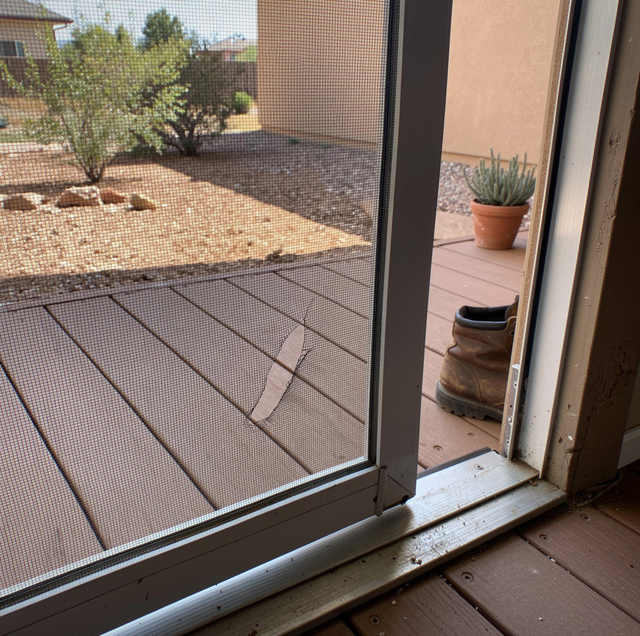
Mesh damage is the most visible sign and the easiest to misjudge. A single small tear, a popped corner where the mesh has pulled loose from the spline, or a hole from a determined pet claw is almost always a repair. The frame around it is still doing its job, the hardware still works, and re-tensioning or replacing just the mesh panel restores the door without touching anything else. Where it gets trickier is when the mesh looks loose everywhere, not just in one spot. Screen material stiffens and becomes brittle after years in direct sun, and once it's lost its flexibility, it tends to sag across its entire width rather than along a single clean line. Press a finger against the mesh in a few different spots away from any visible damage. If it feels taut and springs back, you're dealing with isolated damage. If it feels slack or crackly across the board, the material itself has reached the end of its life, and patching one tear just buys a few weeks before the next one opens up somewhere else.
The spline, that thin cord pressed into the groove around the frame to hold the mesh in place, tells its own story too. Heat and UV exposure dry it out over time, and a spline that's gone hard and cracked won't grip the mesh the way it should, which is often why a screen that looks fine suddenly starts bulging or pulling free at the edges. If the spline crumbles when you press on it, that's a sign the mesh will keep coming loose no matter how many times it gets re-stretched, and it points toward a full mesh replacement rather than a quick re-tension.
A Sagging Or Misaligned Frame
The frame is the part that decides whether a repair will actually last. A door that's still square in its opening, closes flush, and doesn't rub against the frame or threshold as it swings is a good candidate for repair, no matter what else is going on with the mesh or hardware. Once the frame itself has racked out of square, though, every other fix becomes a temporary patch. You'll usually notice it as a visible gap that's wider at the top than at the bottom, or vice versa, along with a door that drags on one corner and swings freely on the other. Look at the corners where the frame pieces meet. If they've pulled apart even slightly, or if the whole door has developed a diamond shape instead of a true rectangle, the structure has shifted, and no amount of hardware adjustment corrects for it.
Moisture is usually behind this one. Humidity swings cause wood-core frames to swell and shrink repeatedly, and over enough cycles that movement loosens the corner joints and lets the frame twist. Aluminum frames are more stable, but a hard impact, an unlevel doorway, or corrosion at the hinge-side stile can still throw one out of true. Either way, a frame that's actually racked, rather than just a hinge that needs tightening, is the strongest single sign that repair won't hold and the door needs to be rebuilt or replaced.
Worn Rollers, Hinges, And Latches
Hardware problems are often the first thing anyone notices, since a door that drags, sticks, or won't catch gets used every day. The good news is that hardware is usually the cheapest and most reliable thing to fix on a screen door, as long as the frame underneath it is still sound. A roller that's worn flat, cracked, or missing a wheel will cause a sliding door to bind and jump the track, and swapping it out usually restores smooth movement within a few minutes. A hinge that's loose, bent, or rusted through will let a hinged door sag at the outer edge, and re-securing or replacing the hinge, along with adding a support like a wheel or spring if needed, generally fixes it. A latch that won't catch is often just misaligned with its strike plate rather than broken, and a small adjustment closes the gap.
The pattern worth watching for is more than one of these failing simultaneously. A single worn roller is routine wear. Rollers, hinges, and a latch all struggling within the same stretch of months usually means the frame has shifted enough to throw off everything mounted to it, or that corrosion has worked its way through the whole set of hardware rather than just one piece. Humid, rain-heavy stretches speed this along, since moisture sits in hinge pins and roller housings and corrodes them from the inside even when the frame looks fine on the surface. If you've recently replaced one piece of hardware and another is already failing, that's a signal to look at the door as a whole rather than chasing parts one at a time.
How To Judge Repair Versus Replacement
Put these three areas together, and a pattern usually shows up fast. Isolated damage on a door that's still square and whose hardware still moves is almost always worth repairing: a torn screen panel, one bad roller, a hinge that needs tightening. Replacement becomes the more sensible path once two or more things are wrong at once, or once the frame itself is out of square, since a twisted frame undermines any hardware or mesh fix you put into it. The mesh's actual physical condition matters more than its age on paper; a five-year-old screen kept out of direct sun can outlast a two-year-old one that's taken a beating from full afternoon exposure.
| What you're seeing | Likely repair | Likely replacement |
|---|---|---|
| One tear or small hole in the mesh | Yes | |
| Mesh loose, brittle, or sagging across the whole panel | Yes | |
| Frame still square, closes flush | Yes | |
| Frame visibly racked or diamond-shaped | Yes | |
| One worn roller or loose hinge | Yes | |
| Rollers, hinges, and latch all failing together | Yes | |
| Same fix needed again within months | Yes |
TIP: Open and close the door slowly while watching the gap along the top and the latch side. If the gap stays even the whole way, the frame is square, and a repair to the mesh or hardware should hold. If the gap widens or narrows as the door swings, the frame has racked, and it's worth having someone look at the whole door rather than just the part that's failing.
That last row matters more than people expect. A door that keeps needing attention, where a new roller lasts a few weeks before it drags again, or a re-tensioned screen tears in a new spot within a season, is telling you the underlying frame or hardware set has aged out even if no single piece looks obviously broken. At that point, continuing to chase individual fixes usually costs more in time and repeat visits than replacing the door once and being done with it. A door that's had one clean repair and then holds for years, on the other hand, was exactly the kind of isolated problem repair is meant to solve.
If you're not sure which category your door falls into, a hands-on look usually settles it fast. Someone who works on these doors regularly can tell within a few minutes whether the frame is still true, whether the hardware issues are isolated or systemic, and whether the mesh has actually reached the end of its usable life. That assessment is worth more than guessing, since replacing a door that only needed a roller wastes money, and patching a frame that's already racked just delays the same call.
Frequently Asked Questions
How do I know if my screen door needs a repair or a full replacement?
Check three things: the mesh, the frame, and the hardware. If only the mesh has a tear or a small hole and the frame still closes flush with working hardware, a repair usually solves it. If the frame is visibly out of square, or if the rollers, hinges, and latch are all acting up at once, replacement tends to be the more lasting fix.
What does a sagging screen door frame mean?
It usually means the frame has racked out of its original square shape, often due to repeated moisture swelling in a wood-core frame or to an impact that shifted the corner joints. A sagging frame throws off how the door hangs and closes, and it undermines any mesh or hardware repair layered on top of it, since the fix has nothing stable to attach to.
Can I just replace the screen mesh instead of the whole door?
Often, yes, if the frame is still square and the hardware still works. Re-screening a panel is a common and effective fix for isolated tears, holes, or mesh that's come loose from the spline. It only stops being the right move once the mesh is brittle and sagging across the entire panel, since a new screen stretched over a spline that's already failing won't hold for long.
Why does my screen door keep sticking or dragging?
Dragging is usually a roller problem: a wheel that's worn flat, cracked, or has lost its bearing lets the door ride unevenly in the track. It can also indicate a slightly shifted frame, which changes how the door sits relative to the track, even if the rollers themselves are fine. Checking whether the gap along the top of the door stays even as it swings helps tell the two apart.
Is it normal for hinges and latches to wear out at the same time?
It happens, especially in humid, rain-heavy stretches where moisture seeps into hinge pins and latch mechanisms, corroding them from the inside. One worn hinge is routine wear. Several pieces of hardware failing in the same short stretch is more often a sign that corrosion or a frame shift is affecting the whole door, not just one part.
How long should a screen door hardware repair last?
A properly done repair on a sound frame should hold for years, not months. If a roller, hinge, or latch you had adjusted or replaced starts failing again within a few months, that's usually a sign the underlying frame has shifted, or the rest of the hardware set has reached the same age and condition, and it's worth having the whole door assessed rather than repeating the same fix.
Get your screen door checked before a small tear becomes a bigger repair — a quick on-site look tells you whether a patch will hold or a new door is the smarter move. Lanai Guy serves Brandon, Riverview, and the greater Tampa area. Call (813) 316-5971.