



What Causes Mold on Lanai Screen Frames? 6 Real Triggers
QUICK ANSWER: Black mold and mildew on lanai screen frames grow because a thin film of organic debris, pollen, dust, and dead algae settles on the aluminum, stays damp in shaded corners, and gives spores something to feed on. The black staining is the mold colony itself, not corrosion eating the metal. Mild detergent, a soft brush, and a low-pressure rinse clear most of it, and better airflow keeps it from returning.
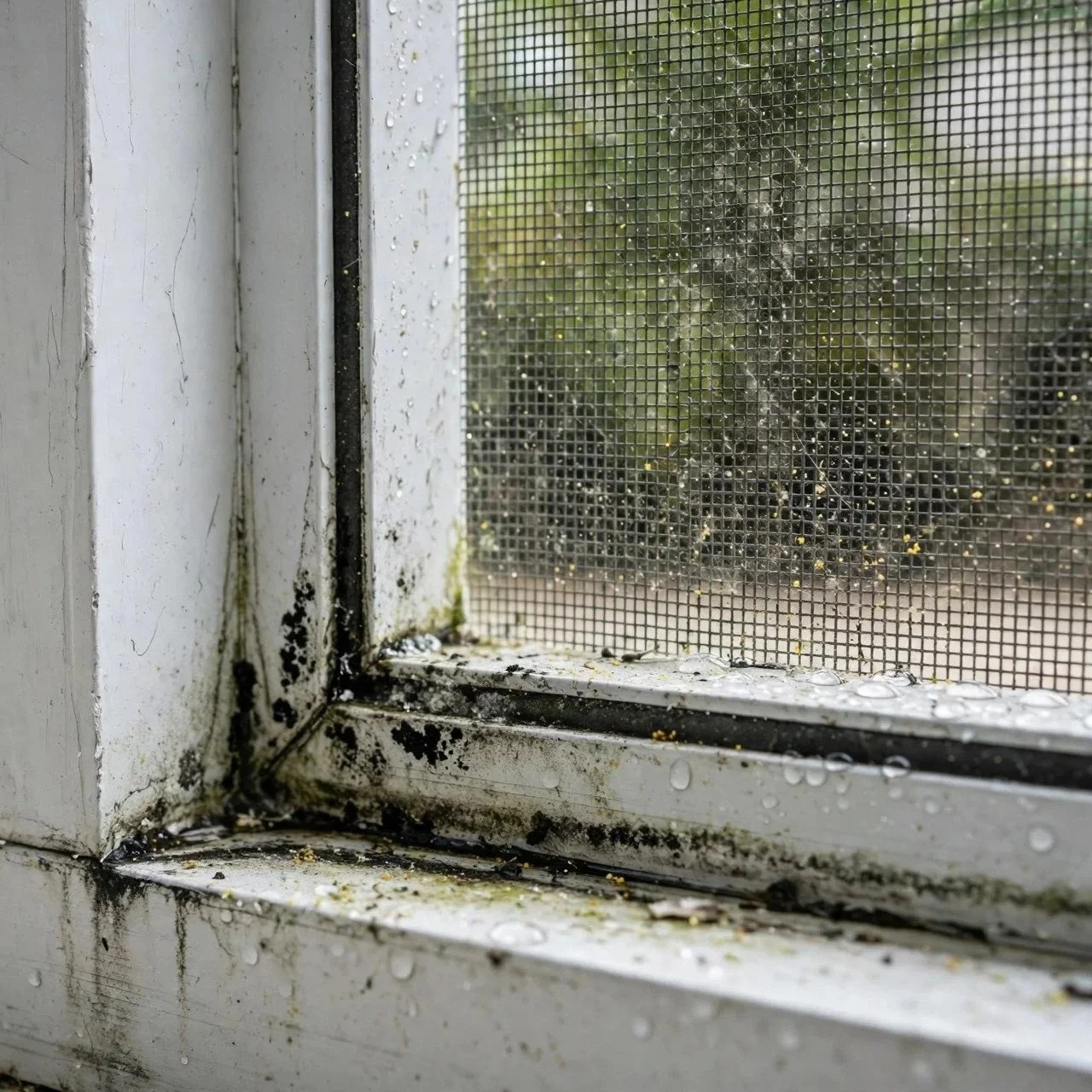
Why Mold and Mildew Colonize Screen Frames in the First Place
Aluminum does not rot, and it is not a food source. So the first thing worth clearing up is that the mold on your enclosure is not living on the metal itself. It is living on everything that lands on the metal.
Every open-air enclosure collects a slow, invisible buildup: tree pollen, fine dust, lawn clippings blown in on the mower, insect residue, and dead algae washed down from the roof panel. That layer is thin enough that you rarely notice it until it turns dark. Mold and mildew spores are already in the outdoor air everywhere, so they do not need to arrive from somewhere special. They only need three things to take hold, and a shaded lanai frame supplies all three at once.
The organic film: This is the actual meal. Pollen and plant debris are rich in the sugars and proteins that fungal spores digest. On a rinsed, bare frame, the spores land and starve. On a filmed frame, they anchor and spread.
Steady moisture: Screen enclosures hold humidity longer than open yard surfaces because the mesh slows air movement and the roof panel keeps direct sun off the lower frame. When the air stays humid, the frames stay damp from morning dew, afternoon rain, and overnight condensation, and that dampness lingers in the low corners where water pools against the spline track.
Shade and dead air: Mold hates dry, bright, moving air. The north-facing walls, the base rail behind planters, and the channels where two frame members meet are the darkest and stillest spots on the whole structure. That is exactly where you see the first black streaks form.
Put those together, and the pattern makes sense. The black grows worse low, in corners, on the shaded side, and behind anything that blocks the breeze. It is a colonization problem, not a metal problem.
Why the black looks like it is coming from the metal: The stain follows the frame lines so cleanly that people assume the aluminum is breaking down. What is really happening is that water tracks along the frame seams and the spline groove, so the film and the mold feeding on it are heaviest exactly where water runs. The mold maps the water path. The metal underneath is usually fine.
Surface Mildew Stain Versus Real Material Damage
Not every dark mark is the same problem, and telling them apart decides whether you are looking at a Saturday cleaning job or a repair.
Surface mildew reads as a soft, blotchy, gray-green-to-black haze that sits on top of the finish. Wipe a hidden test patch with a damp cloth and mild detergent. If the mark lightens or lifts, it is biological growth sitting on the surface, and it will clean off.
Real damage does not wipe away. On aluminum, actual trouble shows up as white or gray powdery oxidation, chalky to the touch, or as pitting where the finish has broken, and the bare metal is exposed. That is a finish issue, not a mildew issue, and scrubbing will not restore it.
The screen mesh tells its own story. Healthy screening flexes and springs back. When you press a fingertip against a panel and the fibers feel stiff, or a corner crumbles or tears with almost no force, the material has gone brittle. Constant UV, heat cycling, and years of weather break down the mesh from the inside, and heavy mold staining on old screen usually rides alongside that brittleness rather than causing it.
An analogy helps here. Mildew on a sound frame is like grime on a windowpane: annoying, cosmetic, and gone with the right wash. A brittle, blackened screen is like a cracked pane. No amount of cleaning brings it back, and forcing it only makes the break worse.
How to Clean Mold Off Screen Frames Safely
Most mildew on a structurally sound enclosure comes off with gentle work and patience. Harsh shortcuts do more harm than the mold did.
Start with the mildest mix that works: A bucket of warm water with a few drops of dish detergent clears light growth. For heavier or older staining, a dedicated outdoor mildew cleaner formulated for screens and painted aluminum is worth using as directed. Read the label before anything else, wear gloves and eye protection, work with the enclosure open for ventilation, and never combine cleaning products.
Go easy on bleach: Diluted household bleach is sometimes used on mildew, but high concentrations are hard on screen fibers, can lighten the frame finish, and will scorch or kill any plant it drips onto. If you use it at all, keep it weak, rinse fast and thoroughly, and pre-wet nearby greenery so runoff dilutes on contact.
Use a soft brush, not a stiff one: A soft-bristle brush or a car-wash mitt lifts growth out of the spline groove and frame seams without shredding the mesh. Work top to bottom so dirty water runs down over surfaces you have not cleaned yet, and let the cleaner sit its labeled dwell time so you scrub less.
Rinse at low pressure: A garden hose with a gentle spray nozzle is the safe tool. A pressure washer aimed at screen tears the mesh and blows the spline right out of the frame track, and once the spline is out, the panel is loose and must be re-splined or replaced. If you ever use powered equipment, keep it on the lowest setting, hold it well back, and never point it straight at the mesh.
Know when to stop and call a pro: A screened enclosure that is two stories, or one where the growth is up on the roof panel, is a fall-risk job. Cleaning it means ladders, wet surfaces, and awkward reaches. That work belongs to someone equipped for it, not a homeowner balancing on the top rung.
Keeping Mold From Coming Straight Back
Cleaning treats the symptom. Regrowth is the real fight, and it is won by starving the film and drying the frames, not by cleaning more often.
Open up airflow: The single biggest driver is dead, damp air. Keep furniture, storage bins, and stacked pool equipment pulled a few inches off the frames so air can move behind them. If a wall stays shaded and still all day, that is your problem wall, and it earns a rinse more often than the rest.
Cut back the greenery: Shrubs, vines, and tree branches touching or overhanging the enclosure do three bad things at once: they drip moisture, they drop the organic debris that feeds the mold, and they throw the shade that keeps everything damp. Trimming vegetation back so nothing touches the frame removes the food and the shade in one move.
Rinse on a schedule. A plain-water hose-down every few weeks strips the pollen and dust film off the frames before mold can anchor to it. It takes minutes, and it is the highest-value habit you can build, because a clean frame gives spores nothing to eat. Pay attention after heavy pollen stretches and after storms that blow debris into the cage.
Fix the water that lingers. Clear leaves and debris out of the base track and any gutter or downspout that dumps onto the enclosure. Standing water and slow-draining corners are where the worst colonies start.
When Heavy Staining Means It Is Time to Rescreen
There is a point where cleaning stops being worth it. When staining has soaked so deep into old mesh that scrubbing barely lightens it, the screen is usually near the end of its service life anyway. Fibers that feel stiff, look chalky, or tear at a light press are telling you they are spent.
Rescreening solves both problems at once. Fresh mesh comes in clean and flexible, and a professional install seats new spline correctly so panels are tight and sealed at the frame. If the frame itself is sound, which it usually is, only the screening and spline get replaced, and the enclosure looks and functions like new. Persistent black that will not clean, brittle panels, sagging screen, and spline that keeps popping loose are the signals that a rescreen beats one more cleaning.
Frequently Asked Questions
Does mold on the screen frame mean the aluminum is corroding underneath?
Not usually. Mold digests the organic film on the surface, while aluminum protects itself with a thin oxide layer that resists rust. The one place to watch is where dissimilar metals meet, such as steel screws in an aluminum frame, because that contact can drive galvanic corrosion that mold staining sometimes hides. Check the fasteners, not the mold.
Is the black growth on my lanai dangerous to breathe?
Outdoor screen mildew is generally low-risk compared with indoor mold in living spaces, since it sits in open, ventilated air rather than a sealed room. People with asthma or mold allergies can still react to disturbed spores, so wearing an N95 mask while you brush and rinse is a sensible precaution during the cleaning itself.
How often should I clean the frames to stay ahead of it?
A light plain-water rinse every three to four weeks handles most enclosures, with a full detergent wash once or twice a year. Enclosures under heavy tree cover or beside a pool with constant splash-out may need the deeper wash quarterly, because the film rebuilds faster where debris and moisture are constant.
Will a mildew-resistant screen actually stop the growth?
Some newer screen products carry an anti-microbial or mold-inhibiting treatment woven or coated into the mesh, which slows colonization on the fibers themselves. It does not stop mold on the aluminum frame, and the effect fades as the coating weathers, so treated screen reduces the problem rather than ending it.
Can I use a magic eraser or vinegar instead of a cleaner?
A melamine sponge lifts spot stains on smooth frame faces but is too abrasive for the mesh and will fuzz or thin it. White vinegar at full strength kills some surface mildew and is gentler on plants than bleach, though it works slower and needs a longer dwell time, roughly 15 to 30 minutes, before you rinse.
Why does the mold always come back worst in the same corners?
Those corners combine the three conditions mold needs and rarely gets broken up: they hold the last of the shade, they trap still air where two walls meet, and water drains toward them and sits. Redirecting a downspout, moving a planter that blocks the breeze, or adding a small solar vent fan to a chronically damp corner breaks the cycle in that exact spot.
Book a free onsite screen assessment — clear the mold and get tight, fresh mesh that lasts. Lanai Guy serves Brandon, Riverview, and the greater Tampa area. Call (813) 316-5971.