



How to Clean a Screen Enclosure and Make It Last Years Longer
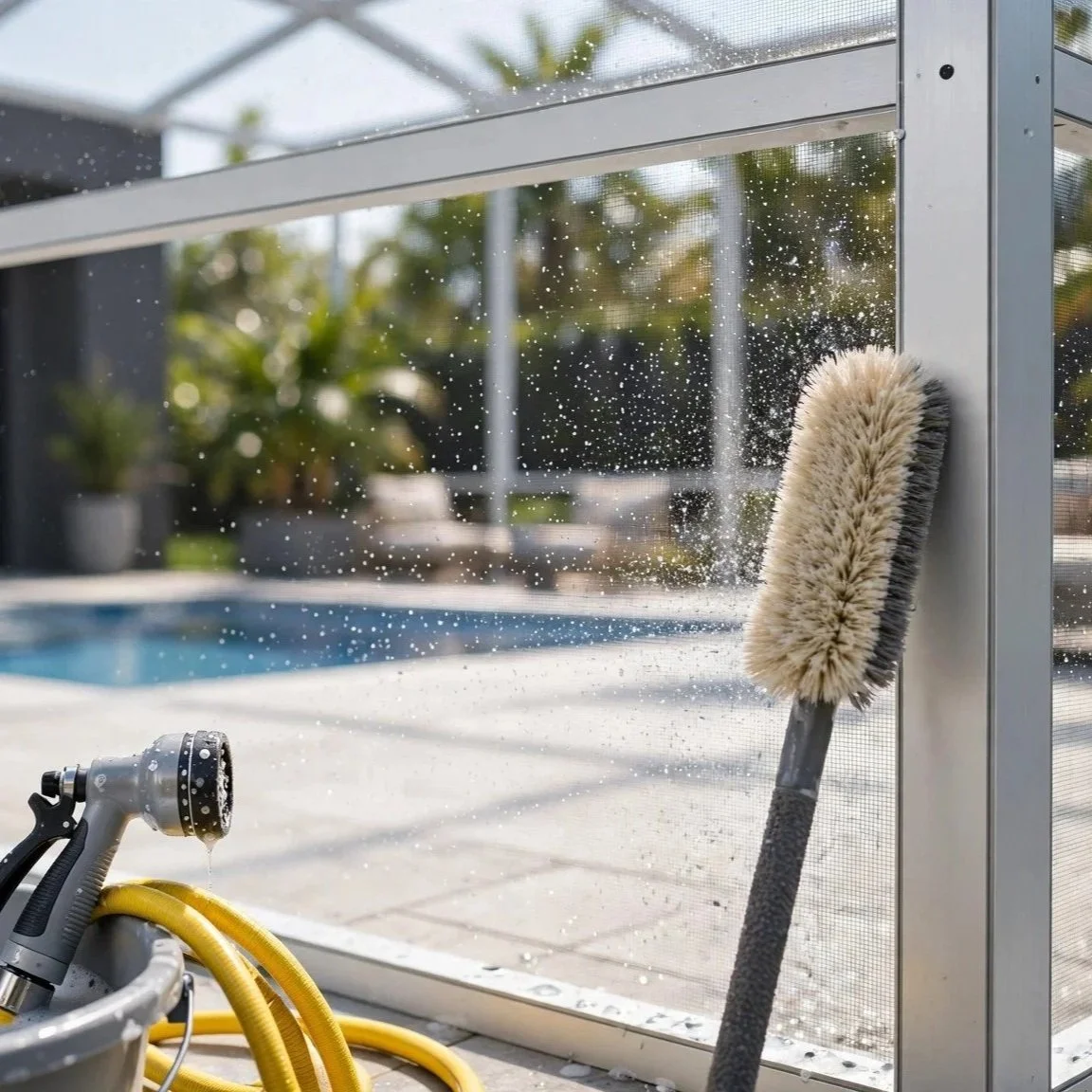
A screen enclosure looks like it should take care of itself. The mesh sheds rain, the aluminum does not rust like steel, and the whole thing just sits there over the pool or patio. Then one day a panel bows out at a corner, a screw crumbles when you touch it, and a black film has spread along the top rail where you never look. None of that happened overnight. It built up slowly while the cage was ignored.
Most of what destroys a screen enclosure is preventable with a bucket, a soft brush, and twenty minutes a season. The things that do the real damage are quiet: mold and mildew feeding on the film of dust and pollen, corrosion creeping into fasteners and hardware, spline drying out until it can no longer hold the mesh in its groove, and debris load piling weight and moisture onto panels that were never meant to carry it. Stop those four, and an enclosure that might have failed in eight years can stay sound for well past fifteen.
QUICK ANSWER: Clean a screen enclosure with a soft brush or garden hose and a mild cleaner, never high pressure, which tears mesh and blows spline out of its groove. Rinse off salt, pollen, and debris; treat mold on frames and screen; check and tighten corroded fasteners; replace dried or cracked spline before panels pop; and keep gutters and vegetation clear.
Why Regular Cleaning Actually Extends the Life of a Cage
The film that settles on a screen is not just cosmetic. Pollen, dust, and organic debris hold moisture against the aluminum and the mesh long after the rain stops, and that damp film is exactly what mold and mildew colonize. Once mold takes hold on the frame, it works into the powder-coat finish and gives corrosion a foothold at every scratch and screw head. A clean, dry frame sheds water and dries fast. A dirty one stays wet.
Salt spray and airborne minerals do something similar to the metal fasteners. Aluminum framing resists rust, but the screws, brackets, and hardware holding it together are often a different alloy, and those are where corrosion starts. A rinse that carries salt and grime off the hardware a few times a year is the cheapest repair you will ever make, because a seized or crumbled fastener is no longer a wipe-down. It is a part that has to be drilled out and replaced.
Think of the enclosure less as a solid structure and more as a tensioned system, like a drumhead. The mesh only stays flat because it is under even tension held by a spline in a groove. Let one part fail- a stretched panel, a soft spline, a loose screw- and the load redistributes onto the neighbors until the next weak point goes. Cleaning and small fixes keep the tension balanced so no single point ever carries more than it should.
How to Wash the Screen and Aluminum Frame Safely
The single most important rule is pressure. A pressure washer at full strength will tear insect mesh like paper and drive spline straight out of its channel, and once the spline is gone, the panel is loose. If you own a pressure washer, either leave it in the garage for this job or drop it to the lowest possible setting and stand well back. A garden hose with a normal spray nozzle has all the force a screen needs.
For the wash itself, mix a mild cleaner into a bucket of water. Dish soap works; so does an outdoor cleaner labeled safe for screens. Use a soft-bristle brush or a long-handled car-wash brush and work in gentle vertical strokes down the mesh, letting the suds do the loosening rather than the scrubbing. On the aluminum frame, the same soft brush lifts grime from the corners and along the top rails where film collects thickest.
The order that keeps you from re-dirtying clean panels: Work top to bottom and rinse as you go. Start at the highest frame members and roof panels, then the upper screen, then the walls, then the kick plates at the base. Rinse each section before the cleaner dries on it, because dried soap film attracts dirt faster than bare screen. Finish with a full rinse of the whole enclosure so nothing is left to streak.
WARNING: Never mix cleaning products. Bleach combined with an ammonia or acid cleaner releases toxic gas, so pick one product and stick to it. Keep runoff away from the pool and any plants at the base, since even mild cleaner throws off pool chemistry and can scorch foliage. Keep both feet on the ground wherever you can, because a ladder on a wet deck beside open water turns a routine wash into a fall or a drowning risk.
Treating and Preventing Mold and Mildew
Mold shows up first as gray or black speckling along the frame and in the corners of screen panels, usually on the shaded side that dries slowest. Catch it early and a soft brush with your mild cleaner lifts most of it. For a heavier bloom on the aluminum, a cleaner formulated for outdoor mold does the work without you reaching for stronger chemicals, and it will not attack the finish the way undiluted bleach can.
The real fix is denying mold the conditions it needs. It wants shade, still air, and a food source of trapped organic film. Trimming back vegetation that overhangs or presses against the enclosure lets sunlight and moving air reach the shaded panels and dries them out. Keeping the frame clean removes the film it feeds on. Together, light and a clean surface do more than any spray, because you have taken away the habitat instead of just killing what grew in it.
Checking Fasteners, Spline, and Panels
This is the part almost everyone skips, and it is where enclosures are quietly won or lost.
Screws and hardware: Walk the base rails and the corners and put a finger on the screw heads. Ones that are snug and clean are fine. Ones that turn freely need tightening, and any that show white powdery buildup or crumble at the edges are corroded and should be replaced before they let go. Matching a replacement to the same type of fastener the frame uses matters, because a mismatched metal against aluminum accelerates the very corrosion you are trying to stop.
Spline, the rubber cord that holds the screen: Spline is the flexible cord pressed into a groove around each panel to hold the mesh under tension. It is the first thing to age. Run your fingers along it and look for spline that has gone hard, flattened, cracked, or started to lift out of the channel. Soft, flexible spline is doing its job. Brittle spline is a panel waiting to pop out in the next strong gust, and replacing a length of dried spline is a small job compared to re-securing a whole blown panel. If a section is lifting, reseating or replacing that run now saves the panel later.
Panels and mesh: Sight down each panel. It should sit flat and evenly tensioned. Bows, sags, and pulled corners point to a failing spline or a stretched screen. Small snags and pinholes can be patched, but a panel that has gone slack across its whole face is telling you the tension is gone and a rescreen of that section is the honest fix.
Clearing Debris, Gutters, and Roof Channels
The flat and low-slope areas of a cage collect leaves, twigs, seed pods, and blown grit, and every bit of it holds water and feeds mold. Roof panels and the channels that carry runoff are the worst offenders because clogged channels back water up under the panel edges and against the fasteners, which is exactly where corrosion likes to start.
Clear the roof and channels by hand or with a soft brush and a gentle hose rinse, never a high-pressure jet that could unseat a roof panel. Where the enclosure ties into the house gutters, keep those flowing too, since an overflowing gutter dumps a constant sheet of water and grit down the nearest cage wall. Trim any branches that drop directly onto the roof so the debris stops arriving in the first place. Less load on the panels means less standing moisture, less mold, and less weight stressing the frame through a storm.
Minor Tears Versus a Full Rescreen
Not every flaw needs a professional. A clean cut, a small tear, or a few pinholes in an otherwise sound panel can be patched with a screen repair patch or a dab of the right adhesive, and the fix will hold for years if the surrounding mesh still has life in it. That is the right call when the damage is isolated, and the rest of the panel is strong.
The calculation changes when the mesh itself has aged. A screen that has gone brittle and chalky from years of sun will tear again an inch from wherever you patch it, because the whole panel has lost its strength. Multiple failing panels, widespread sagging, or mesh that crumbles at the edge all point past patching to a rescreen, where fresh mesh and fresh spline restore the tension across the whole opening at once. A good rule: patch damage, but replace age.
A Simple Seasonal Inspection Checklist
You do not need a calendar full of chores, just a short walk-around a few times a year and after any strong storm.
Every few months
Rinse salt, pollen, and grime off the frame, screen, and hardware.
Brush down any mold speckling before it spreads.
Trim vegetation back off the panels and roof.
Twice a year, look closer
Test screw heads for tightness and check for corrosion.
Run a hand along the spline for hard or cracked sections.
Sight down panels for bows, sags, and snags.
Clear roof panels, channels, and house gutters.
After a major storm
Walk the whole enclosure for blown panels, bent members, and debris load.
Check corners and door frames, which take the most stress.
Weather cuts both ways on a cage, and a good routine accounts for the whole year rather than one season. Sun and heat make mesh and spline brittle over the long haul, while wind-driven rain and storm debris deliver the sudden hits, so the inspection that catches a stretched panel in calm weather is the same one that keeps a brittle panel from becoming a blowout when the wind finally arrives. Steady, small attention beats a single big rescue every time.
Frequently Asked Questions
What screen mesh gauge holds up best against tiny insects and sun?
Standard 18-by-14 fiberglass mesh stops most bugs, but finer 20-by-20 mesh, often sold as no-see-um or "tiny insect" screen, blocks the smallest biters that walk right through standard weave. The tradeoff is airflow and sun load: tighter mesh cuts breeze slightly and catches more debris, so it needs the same rinsing routine a little more often to keep it from clogging.
Can I use a magic eraser or steel wool on stubborn frame stains?
Skip abrasive pads and steel wool on aluminum framing. They scratch through the powder-coat finish, and every scratch is a fresh entry point for corrosion, plus steel wool leaves tiny iron particles behind that rust into orange freckles. A soft brush and a cleaner rated for outdoor aluminum lift stains without opening the finish. For a stain that will not budge, a nylon scrub pad is the most aggressive tool worth using.
How do I get spline to seat without special tools?
A spline roller, a small tool with a grooved wheel on a handle, presses the cord evenly into the channel and is worth the few dollars for anything beyond a tiny repair. In a pinch, the rounded back of a screwdriver can push a short run home, but it dents easily and pulls the mesh crooked. Cut the new spline slightly long and trim it flush at the corner only after the panel is tensioned and seated.
Does the screen door need anything different from the panels?
The door takes far more wear than any fixed panel because it swings, latches, and gets pushed on constantly. Check its hinges, the closer or spring, and the strike where the latch meets the frame, since a door that sags or drags will rack the corner and pop its own screen. A drop of dry lubricant on the hinge pin and roller keeps it swinging square, which protects the mesh from the flex that tears it.
Should I remove screens for a hurricane or leave them up?
For a serious storm, some owners remove or unzip lower wall panels so wind passes through instead of pressing on the whole cage like a sail, which can save the frame from bending even if you lose a panel. Fixed spline panels are not quick to remove, so the practical version is to make sure existing panels are well-tensioned and fasteners are tight ahead of time, since a loose panel is the one that blows first and takes its neighbors with it.
Why does my aluminum frame have chalky white patches?
That chalky white film is aluminum oxide, the metal's own version of surface corrosion, and it often shows up where the finish has worn thin or where fasteners of a different metal sit against the frame. A light film wipes off and can be sealed with a coat of automotive or aluminum wax, which also makes future cleaning easier. Heavy pitting under the chalk means that spot has been corroding a while and the hardware there deserves a close look.
Book a free inspection before a small fix becomes a full rebuild — catch brittle spline and corroded fasteners early. The Lanai Guy serves Brandon, Riverview, and the greater Tampa area. Call (813) 316-5971.