



Why Do Pool Cage Screens Tear at the Bottom First?
QUICK ANSWER: Pool cage screens tend to tear at the bottom first because the lower panels take the most abuse. They're at ground level where they get hit by debris, lawn equipment, pets, kids, splashing pool chemicals, and standing water, and they bear the brunt of wind-driven rain and anything blowing along the ground. The lower screen also tends to collect moisture and debris that degrade it, and it's the part people and animals push against. So while the whole enclosure ages, the bottom panels face concentrated physical stress and exposure, which is why they wear out and tear sooner than the upper screen. Reinforced lower panels (like pet screen or kick plates) can help them last.
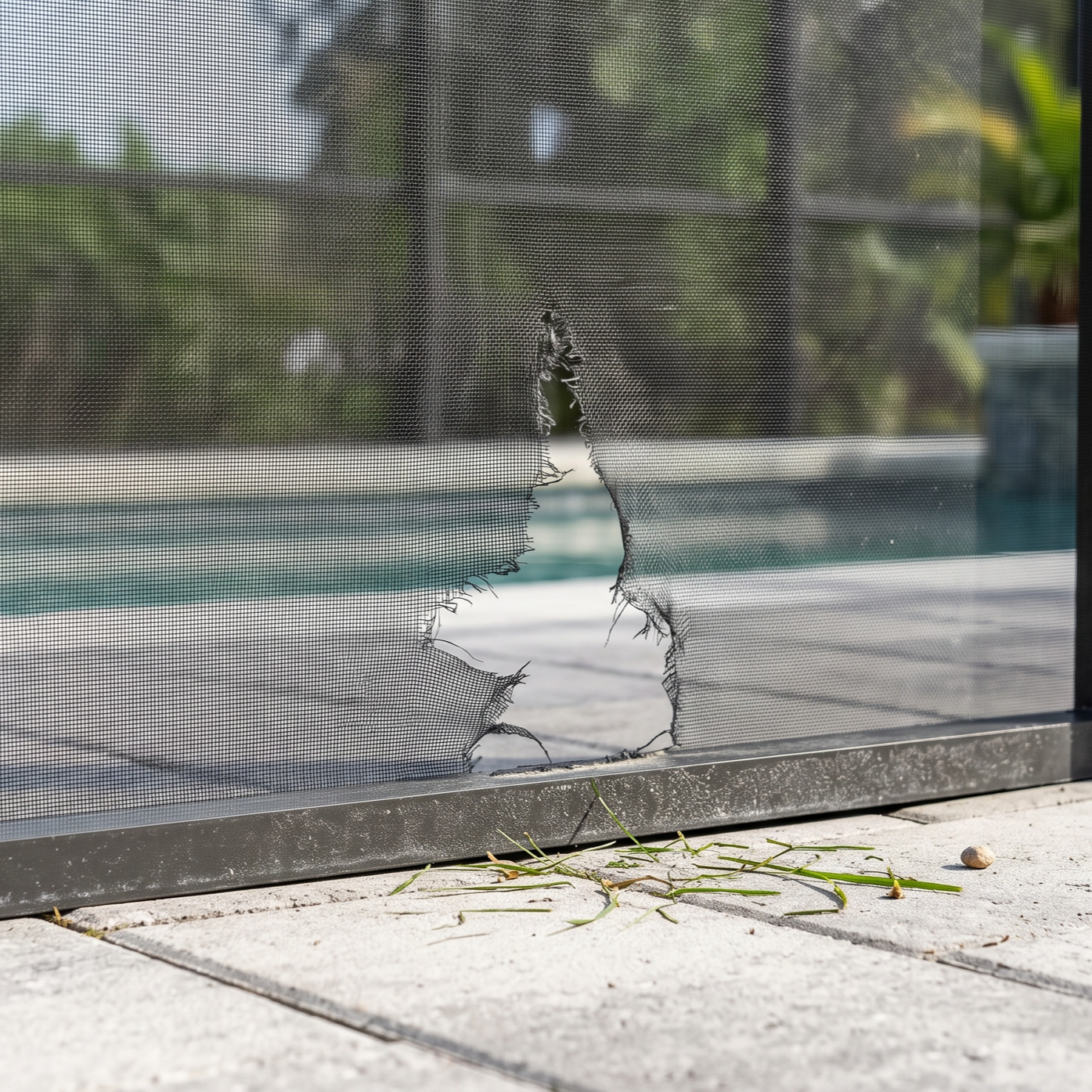
If you've noticed your pool cage screen tearing at the bottom while the upper panels still look fine, you're seeing a common pattern. The lower screen on a pool enclosure consistently wears out first — and it's not random. The bottom panels simply face far more physical stress and exposure than the rest of the cage. Understanding why helps you protect them and make the screen last longer.
The Bottom Takes the Most Abuse
The simple reason pool cage screens tear at the bottom first is that the lower panels endure the most abuse. They sit at ground level, which puts them in the path of a long list of stresses that the upper screen never faces. While the whole enclosure is exposed to sun and weather, the bottom panels take the brunt of physical wear — impacts, contact, moisture, and debris all hit the lower screen hardest. So even as the entire screen ages together, the bottom wears out faster because it's working harder and taking more hits. It's the part of the cage on the front lines.
Impacts and Contact at Ground Level
A big factor is physical contact and impact. The lower panels are right where things hit them: debris and objects blown or kicked along the ground, lawn mowers and trimmers throwing grass and small rocks, pets brushing or pushing against the screen, and kids leaning, bumping, or pushing on it. People and animals naturally contact the screen at the bottom — that's the reachable, walk-up-to height. All this contact and impact stress and tear the lower screen far more than the upper panels, which are out of reach of most of it. Lawn equipment in particular is a common cause of bottom-panel damage, flinging debris that punctures or tears the screen.
| Stress on lower panels | Effect |
|---|---|
| Debris and objects at ground level | Impacts that puncture or tear |
| Lawn mowers and trimmers | Thrown debris damages screen |
| Pets and kids pushing/leaning | Stress and tears from contact |
| Splashing pool water/chemicals | Degrades the lower screen |
| Wind-driven rain and ground debris | Concentrated weather stress |
| Standing water and moisture | Promotes degradation |
Water, Chemicals, and Moisture
The bottom panels also face more moisture and chemical exposure. Splashing pool water — often carrying pool chemicals — hits the lower screen, and those chemicals can degrade the screen material over time. Standing water and dampness tend to collect at ground level, and persistent moisture promotes deterioration of the screen and can build up grime that weakens it. Wind-driven rain drives water against the lower panels, too. So, beyond physical impacts, the bottom screen faces a wetter, more chemically exposed environment than the upper screen, which contributes to faster wear. The combination of moisture and chemicals is hard on the screen material concentrated at the bottom.
Weather and Debris Along the Ground
Finally, the lower panels catch the brunt of wind-driven weather and anything traveling along the ground. In a storm, wind-driven rain and debris blowing at ground level slam into the bottom of the cage. Leaves, dirt, and yard debris pile up against the lower screen, holding moisture and adding weight and stress. So the bottom panels are where ground-level weather and debris concentrate, compounding the wear from impacts and moisture. All of these stresses stacking up on the lower screen explain why it consistently fails before the rest of the enclosure.
TIP: Consider reinforcing your lower panels. Heavier-duty options like pet screen (a tougher, tear-resistant mesh) or a kick plate along the bottom can stand up to the impacts, contact, and debris that wear out standard screen at ground level — extending the life of the panels that always tear first.
How to Make the Bottom Last
Since the lower panels are destined to take the most abuse, the way to make them last is to reduce that abuse and reinforce them. Keeping debris cleared from the base of the cage, directing lawn equipment to throw debris away from the screen, and managing splashing and standing water all reduce the stress on the bottom panels. For longer-lasting protection, reinforcing the lower section with a tougher screen like a pet screen, or installing kick plates along the bottom, gives those panels the durability to handle the contact and impacts that destroy standard screens. When the bottom does tear, it can often be repaired or the lower panels replaced or upgraded without redoing the whole cage. A screen professional can rescreen or reinforce the lower panels and advise on options that hold up better at ground level.
Frequently Asked Questions
Why does my pool cage screen always tear at the bottom?
Because the lower panels take the most abuse. They're at ground level, in the path of debris, lawn equipment, pets, kids, splashing pool water and chemicals, standing water, and wind-driven rain and ground debris. While the whole enclosure ages together, the bottom faces concentrated physical stress, contact, and moisture, so it wears out and tears sooner than the upper screen, which is out of reach of most of it.
What damages the bottom panels of a pool cage?
A range of ground-level stresses: debris and objects hitting the screen; lawn mowers and trimmers throwing grass and rocks; pets and kids pushing against it; splashing pool water and chemicals that degrade the material; standing water and moisture; and wind-driven rain and debris. Lawn equipment is a particularly common cause, flinging debris that punctures the lower screen. These concentrate at the bottom, causing it to fail first.
Can lawn equipment really tear my screen?
Yes, it's a common cause of bottom-panel damage. Lawn mowers and trimmers can throw grass, small rocks, and debris at high speed, which punctures or tears the lower screen when directed toward the cage. Keeping equipment aimed so it throws debris away from the screen and maintaining a clear buffer at the base help protect the lower panels from this frequent source of damage.
Does pool water damage the lower screen?
It can contribute. Splashing pool water often carries pool chemicals, and those chemicals can degrade the screen material over time. The lower panels, which catch the splashing, face more of this chemical and moisture exposure than the upper screen. Combined with standing water and dampness that collect at ground level, this wetter, more chemically exposed environment accelerates the wear of the bottom panels.
How can I make my lower screen panels last longer?
Reduce the abuse and reinforce them. Keep debris cleared from the base, direct lawn equipment to throw debris away from the screen, and manage splashing and standing water. For lasting protection, reinforce the lower section with a tougher pet screen or install kick plates along the bottom, which handle the impacts and contact that destroy standard screens at ground level. These steps extend the life of the panels that tear first.
Do I have to replace the whole cage if the bottom tears?
No. Because the bottom panels wear out first while the upper screen is often still sound, the lower panels can frequently be repaired, replaced, or upgraded without redoing the whole enclosure. A screen professional can rescreen just the lower section, or reinforce it with tougher screen or kick plates, addressing the part that fails first while leaving the still-good upper screen in place.
The Bottom Works the Hardest
Pool cage screens tear at the bottom first because the lower panels take the most abuse — ground-level impacts, lawn equipment, pets and kids, splashing chemicals, standing water, and wind-driven debris all concentrate there. The fix isn't just repairing the tears but reducing the abuse and reinforcing the lower section with tougher screen or kick plates. Since the bottom fails first while the upper screen stays sound, you can often address just those panels rather than the whole cage.
Pool cage screen tearing at the bottom again — Get the lower panels rescreened or reinforced to handle ground-level abuse. Lanai Guy serves Brandon, Riverview, and the greater Tampa area. Call (813) 316-5971.